Wildside Activity Centre
First a little showcase for this important charity that promotes awareness and participation in nature activities, volunteering and conservation.
There is a full programme of fantastic events over the coming half-term week.
Full details can be found at:
http://www.wildsideac.co.uk/images/OctHalfTerm2013.jpg
So no excuse!!! Grab the kids and get down there!!
Wild-Walk
I am inviting anyone interested, to join me and as many of our valley wildlife recorders as possible on an informal walk, covering the mid-section of the valley, between Compton Bridge and Newbridge on Sunday 10th November 2013.
Dogs are welcome, as are children, if accompanied by an adult.We will start at 08:00, with a short skywatch at the top of the Barleyfield, looking for birds on the move along our valley, followed by a trip around the Barleyfield, Compton Park, along the canal and back through the paddocks, following the railway walk.
For all those interested in attending or leading groups, please send me a brief e-mail to smestowsightings@gmail.com so that I can get an idea of numbers.
New Authors
Valley users are probably aware of the presence of our local wildlife photography expert, David Ashcroft, otherwise known as the creator of "Wolves Wild" (http://wolveswild.net/). I have linked his site to this blog from the outset, and I have recently asked David to start keeping formal records of what he sees, so that it can contribute towards our understanding of wildlife, and why it is vanishing at such an alarming rate.
Talking of contributions to wildlife, I bumped into Maureen this morning, who has an excellent feeding station set up in her garden near Compton Lock. She provides an important food supply for the birds in this area, and is also going to start producing records for future valley reports
With these two "Wildlife-Warriors" contributing so much to the reserve, It is therefore fitting that I invite them both as authors to this blog and I am sure you will all join me, in warmly welcoming them to our little, caring community!!
Angus Dickie acknowledges the work of so many others, who have contributed to previous valley reports, every time I see him. Therefore, I also warmly invite anyone else who regularly watches and records wildlife in the valley to get involved by emailing me your details.
As part of the transition from paperback to online reports, I will be offering a pick-up/drop off service, so that we continue to include valuable manual records, provided by passionate enthusiasts, who are, perhaps less able or willing to start surfing the net!! Thank you so much for your continued support.
Moving Mountains Nature Network - Charity Wildlife Walk - Spring 2014
I am planning an event, which will raise awareness and trigger a strengthening of the protective nature networks, around Smestow Valley, Clayhanger Marsh (Diverse habitat and SSSI), and an important urban wildlife corridor near Harborne. Local schools will be involved, so that we can lead our children towards the beauty of Mother Nature that lies within our green spaces. Who knows, it might generate our next Sir David Attenborough or Chris Packham!!!
Any local individuals, groups, charitable organisations or businesses that would like to get involved, please register your interest at smestowsightings@gmail.com
Thank you

Tuesday, 29 October 2013


Wednesday, 23 October 2013
wed 23 oct 2013 mid afternoon
sunny but chilly westerly breeze
Very wet underfoot ( or should I say wheels ). I cycled from Compton Lock to Aldersley Junction and had my first little grebe of the autumn at Tunstall Water Br and a grey wagtail at Tettenhall Old Br.
After a quiet spring, summer and autumn, cheer up it will soon be christmas! lol.
Thursday, 17 October 2013
Tettenhall and District Draft Neighbourhood Plan - Have your say!!
I am in the process of ploughing through this important plan, and for so far it looks simply excellent!!!
Anyway, here is the official briefing on the plan................
The Draft Tettenhall Neighbourhood Plan for the 2 wards of Regis and Wightwick is out for public consultation until 31st October 2013. The Plan is a national frontrunner. Its purpose is to give local people greater ownership of how their neighbourhoods are developed over the next 10 years. Once ‘made’, next year, any planning application made for a development or change of use of land or buildings in our area, will have to be assessed against the Neighbourhood Plan, alongside national and city-wide policies for planning. It is therefore of huge importance.
The Draft Plan is based on hundreds of ideas and suggestions gathered over the last 2 years from local people and has been drafted by local residents.
Our vision states:
‘ As residents we take pride in our attractive, characterful and vibrant area, and especially in all the green spaces ranging from Smestow Valley Local Nature Reserve to small domestic gardens. Our Plan will help conserve both the places of historic interest and those most appreciated in the Character Studies which were carried out by local people. Designs for all new development will be required to show sensitivity to local forms, scale and materials and to meet high building standards and so ensure sustainability. The Plan will enable local businesses to invest in new opportunities. Action is required to alleviate traffic problems, whilst housing, community buildings and other amenities will need to be upgraded over time. By putting these priorities into our Plan, we can enable people to make it as good a place for the next generation as it is for us.’
For lots more information and to view the Draft Neighbourhood Plan and to complete a feedback form online at http://www.ourplaceourplan.org.uk/
Friday, 11 October 2013
Missed the Massive Redwing Movement and Twitter Feed to Connect us to Nature
Friday 11/10/13 - Moderate NE, overnight light rain, clearing : Barleyfield "vismig"
A frantic day on the work and home front yesterday meant that I was left to read about the tens of thousands of Redwing that had reached Britain on favourable winds.
An incredible 33,082 were recorded over "The Pinnacle", Sandy, Bedfordshire, in just four and a half hours yesterday morning!! A more modest 2,600 had passed over Black Bank in Staffordshire.
I hit the patch this morning, knowing that winds were more northerly and were likely to halt movements, but still wanted to get some idea as to whether the valley had witnessed some of this event.
It was immediately clear, on arriving at the Barleyfield that birds had got this far West. There was a "movement" of birds west, but aside from 3 groups, the largest holding 35 birds, the rest were grounded birds that were lifting from overnight resting places.
A one hour vismig produced the following, before fading:
Canada Goose 37 SW
Mallard - 5 SW
Cormorant - 4 High SE and 1 soon after heading South - all adults
Black-headed Gull - 65 SW
Woodpigeon - 19 SW - apparently still too early for migrants on the favourable NE
Pied Wagtail - 4 SW
Meadow Pipit - 4 grounded birds, lifted off the Barleyfield and headed SW
Redwing - 150 - c50 on migration West and the other c100 were grounded birds, lifting and heading low West. 55 of these were around the Lower Alders.
Song Thrush - 1 South
Blackbird - 6 coping remarkably well heading West on the cross wind.
Starling - 10 local birds SW and 7 presumed migrants heading West.
MOVING MOUNTAINS NATURE NETWORK (MMNN) -TWITTER FEED
As part of the push towards connecting more people with wildlife, I have now set up a Twitter feed on this blog, that will provide you with updates regarding wildlife events, issues and sightings. They are all my comments or retweets, and will not include personal or provocative opinion from others. Media releases will be shown, where I feel that they are relevant to the understanding and protection of wildlife.
MMNN members who follow us on Twitter will benefit from having their events and causes highlighted on this blog.
I hope that this adds to your experience, whilst visiting us!!
Thank you.
Tuesday, 8 October 2013
Barleyfield Provides Yellowhammer with Bed and Breakfast!!
Sunday 6th October: Clear, dry, cool start, Light SW - Barleyfield area
As posted previously light South-westerlies, really do suit visible migration in the valley, today producing the best Pipit passage of the Autumn so far for me (there are still no noticeable Woodpigeon movements over the mid-section of the valley):
Canada Goose - 117 SW early
Black-headed Gull -217 SW from roost to Staffs feeding areas
Lesser Black-backed Gull - 10 SW
Stock Dove - 2 NW
Collared Dove - 3 South, can't remember when I last seen this many in one morning from Barleyfield!!
Meadow Pipit - 191 South - these really are good conditions for this species and it was great to see good numbers dropping onto the newly extended middle scrub!!
Pied Wagtail - 17 South
Grey Wagtail - one West early on and one SW from Graisley Culvert later.
Song Thrush - 2 West and 1 South (1 uttering brief phrases of song to the SW)
Starling - 1 SW was poor but c25 left from the academy floodlights SW later
Chaffinch - 5 South
Goldfinch - 4 South and 7 around the North end of the Barleyfield
A remarkable 38 species were noted, without leaving the Barleyfield area, with the highlight being a female Yellowhammer that had been roosting in the Hawthorn at the tip of the middle scrub. It preened, called a few times, dropped to the ground then flew off South at 07:00.
Other notable sightings included.....Geoff Russon!!! YES, it sounds like he is migrating South again now as well, so get used to seeing "Mr Camouflage" on a regular basis again (we hope).
Sparrowhawk - one SW along valley early and one East into the middle scrub later
Great Spotted Woodpecker - female at top of Barleyfield
Dunnock - getting more vocal with 3 around the south end
Blackcap -male and probable adult female at Hanging Gardens
Chiffchaff - birds singing at top of Barleyfield, where two were later seen and also at Eddy's Alders
Goldcrest - one at top of Barleyfield
Nuthatch - one calling from Eastern border
Jay - 2+ in SW corner
Bullfinch - 4+ around
Saturday, 5 October 2013
After the Peregrine strikes, the
name of the game is patience . . .
Dunstall Park
Sunday, September 29th 2013, mid-morning, cool, high broken cloud, easterly breeze.
Two weeks away in sunnier climes, so now it's time to see what might still be around and what might have arrived. The ground staff say the last swallows and martins departed early last week, and the only migrant seen on this quiet morning is a single Blackcap feeding on elderberries in the north western corner of the site. An adult Pied Wagtail forages along a drainage ditch by the grandstand, a male Sparrowhawk flaps and glides low towards the Farndale estate, a Jay flies from the oak copse, and on the central grass area 50-plus Lesser Black-backed Gull sit or stand with 160-plus Black-headed Gull and an adult Herring Gull. At the lake a single Lapwing stands somewhat forlornly by the island, four Snipe and 16 Teal are lined along the water's edge out of the wind, four Coot and four adult and two juvenile Moorhen swim or pick their way through and around the banks of spiked aquatic grass, an adult Grey Heron stands hunched near the perimeter fence, and a Grey Wagtail calls as it flies away towards the Staffs & Worcs Canal.
Tuesday, October 1st, morning, cool, dull, south easterly wind.
Duck numbers are increasing now, with birds coming out of eclipse and dabbling species returning to the racecourse lake as winter visitors, taking advantage of relatively low water levels. Five Mallard, possibly a female and her offspring present for some months, are feeding, at least 17 Teal rest and preen, and near the Smestow brook overflow apron five male Shoveler are grouped together, their chesnut flanks and dark green heads now becoming more obvious as their breeding plumage emerges. Ten Snipe are visible (there will almost certainly be more present), and a last check reveals a single Green Sandpiper feeding along the margins (there have been regular records since mid-June of this migrant wader calling in at the lake).
Wednesday, October 2nd, mid-morning, dull, warm, south easterly breeze, clearing later.
Meet up with a Codsall birdwatching group on the car park as arranged at 10 o'clock, and notice as we sign in at the hotel reception that Gareth's name is already in the book. That means he can tell us what's about, and, knowing him, he may well have found something good. So, through past the grandstand, and yes, already there's the "cronk cronk" of a Raven, the bird moving north westwards towards Stockwell End and Tettenhall. A good start, but hang on, Gareth's approaching to tell us that a "huge" female Peregrine has in the last ten minutes come in low over the lake and has sent ducks, waders, the lot, flying to the four corners of the earth. Gareth's on his way to work, he can't stay, but he wishes us luck. OK, we'll just have to be patient, not everything will have gone. An initial check shows Coot and Moorhen going about their fussy business as two Stock Dove fly up from the lake edges, two Jay fly towards the Farndale and at least 60 Starling go to and from the top of nearby floodlight pylons. In the distance come the autumnal calls of two large skeins of Canada Geese, at least 150 birds honking their noisy way low over Newbridge towards the city. Then, one by one, the Teal quietly emerge from the aquatic grass, seven of them eventually resting or feeding near the island. Two Snipe are spotted, sleeping one-legged and head tucked in, their brown striped plumage perfectly camouflaged against the dying yellow of the sallows. Someone's sharp eyes pick what could be another flying away from the lake, definitely a wader, but the bills's too short, a white rump shows as it turns to circle before leaving north eastwards, it's a Green Sandpiper, possibly the bird seen at the lake the previous day. Time's getting on, so we move along the racecourse's north western edge, where a juvenile Buzzard floats low over the canalside trees, a Nuthatch calls, and at least two passage Chiffchaff flit in and out of the elderberry and bramble bank near Aldersley canal junction. Finally, back to the hotel and off to lunch. Just like the weather, things turned out fine in the end . . .
Saturday, October 5th, morning, dull, calm, warm, heavy overnight rain.
A quick visit, but enough time to see that Snipe numbers are building nicely, with at least 20 at the lake. Thirteen Teal are present, and there's the unusual record for the lake of a Long-tailed Tit flock moving through the waterside bushes. Nearly all the Coot have now dispersed, with only three seen at a site which has enjoyed its best-ever breeding year for the species.
(NB. Dunstall Park is a closed commercial site. Access is strictly controlled).
Saturday, 28 September 2013
Patchy Vismigs, 2nd Wader Species attracted to Compton Park Wetlands and Work in the Valley
Unlike last year, when I had more time in September, this years vismigs (visible migration watches), from the Barleyfield, were rather hit and miss. This led to my missing the main hirundine (Swallow and Martin) passage, which occurred in the region on 15/9 19/9 on favourable South-westerlies.
22/9/13 Dead calm and mild, overcast Light SW 6:45 - 8;45am
Canada Goose - 65 SW
Mallard - 7 South
Lesser Black-backed Gull - 4 South
Black-headed Gull - 97 SW
Woodpigeon - only 6 SW
Swallow - 42 South
Tree Pipit - 2 separate individuals South calling
Meadow Pipit - 64+ South
Grey Wagtail - 2 South
Pied Wagtail - 8 South
Starling - 3 SW
Greenfinch - 3 South with 6 local at top of Barleyfield
Goldfinch - 1 East and 20+ local around Compton Park
Other sightings: Adult and Juv Buzzard calling from Tettenhall ridge, 1 Stock Dove on Barleyfield
4 Mistle Thrush on playingfield by Meccano Bridge, Dunnocks becoming more active with 3 calling at the South end of the Barleyfield, Chiffchaffs singing from top of Barleyfield and Western border, 2+ Coal Tit calling from the Western Border Annex.
22/9/13 7:00 till 7:30 Top of Barleyfield
A rare dusk visit paid dividends. 2 Common Sandpipers, headed low over the Barleyfield in a direct line Southwards from over the Lower Alders!! Whether they had actually visited the wetlands or not was unknown, but they were certainly attracted down to it as darkness was approaching.
This is the second wader species at this new site now, after a Little Ringed Plover was found there, again before dusk in the Spring.
23/9/13 1:00 am Junction of Compton Road and Richmond Road
Tawny Owl hooting there.
23/9/13 Vismig top of Barleyfield Misty overcast, drizzle, Light South
Autumnal weather produced the first vocal Song Thrush at Compton Hill Drive.
Canada Goose - 31 SW
Mallard - 4 South
Skylark - 3 very early birds, headed South together, briefly dropping onto the Barleyfield, producing a moment, which represented a flash-back in time to when large flocks were seen on the deck at this site. Excitement was therefore mixed with sadness.
Swallow - 91 South with the largest group holding 45 birds
Meadow Pipit - 24 South
Pied Wagtail - 19 South
Jackdaw - 11 South
Starling - 11 South 1 NE and 40+ feeding on the playing field by Meccano Bridge in the damp conditions.
Other sightings:Great Spotted Woodpecker at top of Barleyfield, 2 Chiffchaff singing from western border and middle scrub. There was also a fall at Eddy's Alders, with c10 Chiffchaff, 2+ Willow Warbler and 3+ Blackcap present there. Commitments prevented a tour of the patch to see other landings, which wasn't half frustrating!!! 5+ Song Thrush were also feeding in Elders there.
25/9/13 vismig abandoned as conditions worsened from dawn, but a high count of 112 Canada Geese was notable.
26/9/13 vismig again abandoned, as forecast easterlies, turned out to be brisk NE, which just kills passage at this time of year, though the sturdier Woodpigeons will love such conditions, when they start to move in numbers next month. Another Song Thrush, was uttering short bursts of song near Meccano Bridge.
With 40+ Magpies heading between West and North-east at dawn, the total roost, must now be well over 60 birds. A Sparrowhawk was over Tettenhall College and 2 Grey Wagtail headed West off the wetland.
27/9/13 vismig 07:00 - 08:00 Light SE, dry, 70% cloud cover
What seemed to be highly favorable conditions, failed to fully materialise, although anything would have beaten the previous two watches!!
Canada Goose - 35 SW 2 NE
Mallard - 12 South
Swallow - 25 South in 3 groups
Meadow Pipit - 3 South
Pied Wagtail - 25 South
Jackdaw - 5 South ex roost
Starling - 34 SW from off the floodlights at the Academy
Conservation Works
The woodland edge and meadow has now been crafted by Compton Lock, and similar works will take place at the Paddocks, near the ranger station at Newbridge. This will result in an increase in biodiversity (the range of wildlife) and will benefit walkers, as the new method of management will reduce vegetation encroaching onto the footpaths.
The next Smestow Valley Advisory Group Meeting will be held on Tuesday 8/10/13. I have already raised the issue of Contractors sticking to their agreements, with regard to the emptying of dog bins and the carrying out of work to order, in areas of importance to wildlife. The ranger services have been superb, as always in sorting these issues.
Also the Autumn and Winter work program is on the agenda, in an effort to increase the information available to us ahead of any works commencing in the valley.
At a time, when staff and resources are already scarce, new government plans to protect the economic and social value of nature, which involve new ranger and leisure services work at recently designated Local Green Spaces and Local Wildlife Sites, are adding to workloads.
I feel that it is right, therefore to say that the council are doing a superb job, given the present circumstances and wish to thank them for taking on every issue which I have raised on behalf of local residents and dealing with them effectively.
Please email me at smestowsightings@gmail.com if you have any issues that you would like me to raise at this meeting.
Moving Mountains Nature Network
A new article "Local" is the Word to Halt the Decline of Wildlife in the UK - BUT only with National Coordination , has been posted on the network site. This focuses on the importance of local wildlife clubs, local recorders and local recording offices (LRC's), and the creation of local partnerships that engage local communities and support the tireless work of local council biodiversity officers, wardens and volunteer patch watchers and bloggers across the country.
The item also highlights the need for coordination in terms of the creation of distribution and status data, and also national campaigns, which encourage children to become naturalists, and which provide information points in all green spaces, sign-posting the public towards, their local wildlife clubs, societies and volunteer groups.
The network now has 165 sites registered, so if you support this initiative please add a link to your blogs and spread the word. Member issues have already been taken on and we are, after less than two months, a third of the way towards a target membership, where we can gain national recognition and march on towards the ambitious goal of halting the decline in the UK's wildlife.
Thank you.
Saturday, 21 September 2013
MMNN - Contributing to Science OR Encouraging Participation ?
I have had it put to me this week that MMNN has to decide which side of the fence it is on.
My vision for MMNN is quite clear: It is so easy to tick both boxes and make a scientific contribution AND engage the public.
I can illustrate this fairly simply:
1. Members such as Council's and wardened reserves, that have the knowledge and experience of data collection, will continue to use a platform such as Living Record, or send data into local recorders and LRC's. They already do an excellent job contributing to Science. My aim here is simply to get as many members as possible onto a common platform, because it will help everyone along the chain in terms of quality and resources. Coordination, repeated surveying and "think-tanks" will help member council's in their tireless pursuit of biodiversity targets and allow them to monitor their performance more easily.
2. Next. The interesting one. What I call "The Second Element": the army of wildlife enthusiasts that hold intimate knowledge of their patches.
To increase the quality and volume of the information hitting the LRC's and NBN, we need expansion of Local Wildlife Partnerships (LWP). This allows a patch of the British countryside to act as a structured "reserve". My life has taught me NEVER to have barriers or say something cannot be done. A central role of MMNN will be to assist in the creation of local partnerships and to identify new sites that require protection and designation, through our army of "bloggers" and "patch" watchers.
It may well be the LWP's that provide the answers, as to why wildlife has vanished in such a short period of time, simply because they venture away from the managed reserves and into our more typical countryside and "wild Britain". The "patch" watchers may prove to be biodiversity's knights in shining armour!!!
3. Now for the worm and what I call the "Third Element". I had a biodiversity officer comment last week that 95% of the population have no intention at all in engaging with wildlife.
Furthermore, my friend's son was asked at school a few weeks ago about his hobbies in front of the class. When he replied that he was a birdwatcher, his supply teacher laughed. Needless to say, after my involvement, her agency have been informed that she is no longer welcome at that school!!
To meet our 2020 biodiversity targets, this attitude has to change. MMNN can embrace participation and education, WITHOUT compromising Science and Conservation. I'm not being funny, but if you ask a School to identify Worms, you will get misleading information!!! It probably would bore most of the kids to death too!!!
If "Citizen Science" goes wrong, you cannot blame those making the records for down-grading the quality of data. Surveys have to be designed carefully from the outset , in order to maximise accuracy of results and the positive influence that it has on the participants.
Is it right that we have more than 80,000 species of wildlife in the U.K? The vast majority of BAP species, don't even appear in the best selling field guides. These have to be recorded only by those with the necessary ability. But I will not accept that MMNN has to be on one side or the other, when the answer is so simple.
Schools can be provided with surveys, which cover easy to identify species. Don't ask them to survey Small White Butterflies, because some kids or even teachers may confuse them with worms, if you see what I mean?
But if every school in Britain performed a survey of male Orange Tip Butterflies, would you disregard the data as useless because it was produced by the 95% of the population that we need on board to save our wildlife? How many future naturalists would this approach produce? How many kids might be influenced by the hunting Kestrel that they see, whilst out on a warm Spring day with their school mates, counting butterflies on their local green space?
We are so lucky to have so many safe LNR's, Wildlife Trusts sites and other reserves and parks in close proximity to schools. We are also blessed to have our State of Nature partner organisations, and I am sure that they can produce a short-list of say 200 species, which are unmistakable and that can be surveyed annually by schools. If I were a science teacher and I had these species on Power Point, the first thing I would be doing with them, on the first week of the academic year, is showing them to my class and allowing them to pick their favourites to study during the year, so that they would already be attached to the project. (I think this area is actually part of the U.K's commitment to biodiversity?). There are a good number of easily identifiable "indicator" species, that if widely surveyed repeatedly, would tell scientists a lot about the strength of ecosystems, locally and nationally, and high-light where they are breaking down fast so that local factors can be identified.
If we make barriers, we shall have barriers!!! Kingfishers are still seen on the section of the River Cole in Birmingham where I first fell in love with nature. I will not allow them to vanish because we failed to rise individually and collectively to the challenges facing the U.K's unique range of wildlife and habitats, by placing obstacles in the way that aren't even there.
Join MMNN today. Together WE REALLY CAN make a difference.
Wednesday, 18 September 2013
Barleyfield Trimmings and Quite Vis-mig
Wednesday 18/9/13 Cool, drizzle with brief interlude between 07:00 and 07:45 allowing short vis-mig from top of Barleyfield. Light NW.
NW winds rarely produced good vis-migs last September, because of the valleys linear position running NE to SW and today proved that once again:
2 Cormorant South
4 Meadow Pipit circled field and then SW
7 Starling SW
8 Greenfinch SW
Also 2 Great Spotted Woodpeckers and 1 Green Woodpecker
Just a note to all users of the Barleyfield: The contractor will be returning soon to pick up the grass cuttings. Thank you to Wolverhampton CC Ranger and Leisure Services for providing such a rapid response today, regarding this issue.
This method of leaving the cuttings for a short while allows the seeds of the meadow flowers to disperse more effectively.
As regards the new areas of set aside, you can feel already, just how much of a difference this new regime will make to the insect and mammal populations, whilst also helping late flowering plant species. Cinnabar Moths, may well complete there life cycle here now which will add to evening walks.We may well get a Wintering Kestrel back, and the umbellifer stands may attract migrant or Wintering Stonechat.
Thank you to all those that were involved in the planning and authorisation of this initiative, which will enhance the biodiversity at this site, by adding micro-habitats and buffer zones for wildlife.
Tuesday, 17 September 2013
Moving Mountains Nature Network - Cheshire, Berkshire and Leicestershire Lead the Way
Just a brief update to say THANK YOU!!!!!!!
Our membership now stands at 125 sites.
For everyone out there who has followed and shared this initiative so far, THANK YOU.
For those that have, or are in the process of joining - together, we really can move mountains for nature.
Special mention has to go to the "bloggers" and "birders" of Cheshire who are banging the drum for this network. These committed volunteers have an intimate knowledge of the State of Wildlife on their local patches, and this can now be utilised through MMNN to halt the decline of species and help the U.K meet it's biodiversity targets.
Special mention, also to council officers in Berkshire and Leicestershire, who have seen MMNN as a way to help meet targets for the protection of biodiversity in their local communities.
Coordinated surveying that breathes life into old data sets and creates new trend data for assessing performance will add to the efficient use of council resources, but will also provide more status and distribution data to the national wildlife organisations that are working so hard to protect and halt the decline in the U.K's wildlife.
Contact from Canada raises hope for sister sites to rise in other countries, so that we can join hands in a peaceful and protective way.
I have started work on local initiatives, involving raising awareness of our cause, through schools.
MMNN has risen and now lets see where this exciting journey takes us all.
Saturday, 14 September 2013
Gareth Clements Sightings Report
Gareth sent the following sightings summary from his visit to Dunstall Park (Private, strictly restricted access) this afternoon
14th september
2 till 330pm
Racecourse
Wheatear 1 juvenile, teal 6, shoveler 1, swallow 10, house martin 10+, chiffchaff few in bushes, snipe 10, buzzard 3, pied wag 15, lbb gull 16, herring gull 1, bh gull 48, grey heron 2. Gareth clements
Moving Mountains Nature Network (MMNN) - Month 1 Progress report
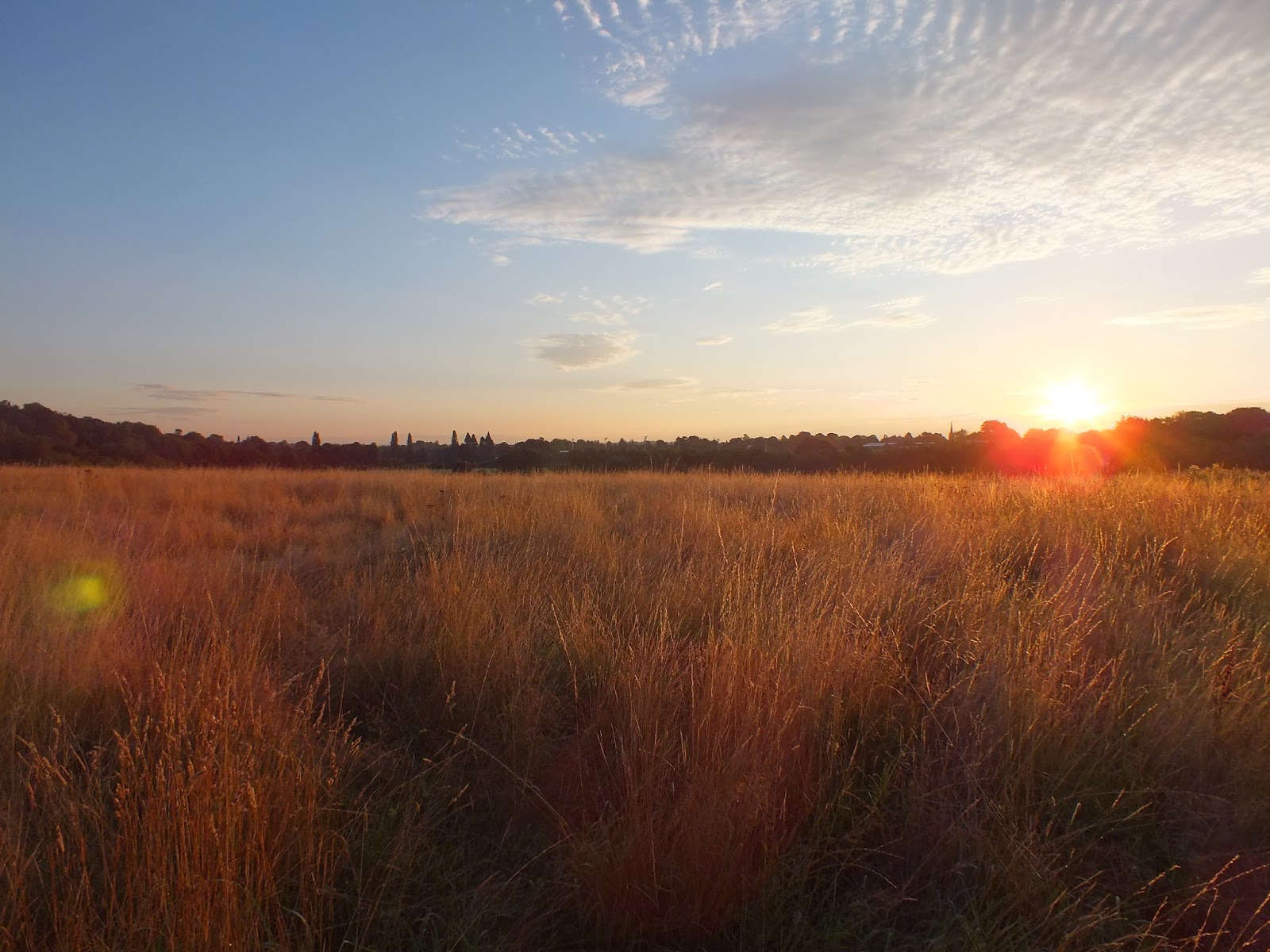 |
| New Dawn Rising: Sunrise over Smestow Valley LNR |
The green area between Oxley and Wightwick has been made famous to conservationists across the UK thanks to the ground-breaking treatise "The Endless Village", which in the 1970's had used it as an example of how a linear park could survive and flourish within a conurbation (the study led to the formation of the first Urban Wildlife Group and helped create the other "green corridor" nature reserves up and down the country). (Reference to Angus Dickie's "Smestow Valley Bird Group 1988-2013")
It is quite fitting, therefore, that the members of the former Smestow Valley Bird Group have served to reignite my passion for wildlife, and put the valley back on the map, as providing the launchpad for MMNN.
After months of planning, the launch of the network on 13th August 2013 filled me with mixed feelings. On the one hand, there was the prospect of a dream coming true. My father's prophecy, that I may be able to change the world for the better, felt like it may actually become a reality. On the other hand, despite my appetite and enthusiasm, there lay negative thoughts that the network would fail to attract support or interest from the outset.
As I write this update, my heart is filled with hope. So many people have taken time to understand this initiative, and respond in a positive manner, because of their open-mindedness, commitment and passion for wildlife.
Customer service staff provided vital support in sign-posting and redirecting mail to those actively involved with biodiversity management. Thank you.
"Patch" watchers have joined the network and promoted it so that their intimate knowledge of their local wildlife sites, is shared in order to discover just why wildlife has vanished at such an alarming rate. Thank you.
Council biodiversity officers have provided in-depth information, constructive comment and support for the network. Any fears that MMNN would be just another data collector have been allayed, as it has become seen that the network will serve to coordinate and repeat surveys so as to breathe life into old data sets and promote the creation of trend data for status and distribution that allows evaluation of whether biodiversity targets are being met at both site and national level. Thank you.
The other concern: that MMNN is repeating the work carried out by the national wildlife organisations, has been removed. The network will actually support these organisations by increasing the uptake of their surveys, and by working towards more coordinated data work in the future that provides them with more trend information to assist future assessments of the State of Nature. Also by working with the "Third Element" through education and media coverage, MMNN will inevitably lead to an increase in the membership for all wildlife organisations.
 |
| MMNN: It's role in the U.K. (click to enlarge) |
My last thank you will go to the great man himself. As a child I was limited to the greenbelt and old mining works around Norton Canes in Staffordshire, but it was Sir David Attenborough that inflamed the desire for conservation and the protection of this beautiful world's wildlife.
With the commencement of surveys for The State of Nature partners, scheduled to start at member sites from 1st January 2014, my focus is now on membership so that we can obtain official recognition.
You really can make a difference and help discover why the nation's wildlife is vanishing, by sharing your knowledge of your "patches", reserves, parks and other sites of importance to wildlife.
 |
| The Great Briton: An impression in concrete at Brandon Marsh Wildlife Trust Reserve in Coventry, to add to the millions of impressions he has made in our hearts. |
If you support the cause, then please join today and thank you as always for your interest in the MMNN initiative.
Thursday, 12 September 2013
Those beaky boys are back, and the Gareth transfer is complete . . .
Dunstall Park
Summer's over, we're in early September, and things are relatively quiet, with few migrants to report and some wintering species beginning to appear. The lake is still attracting Green Sandpiper (two were present today, 12/9), single Yellow Wagtail (30/8 and 5/9) have been foraging on the central grass area with good numbers of Pied Wagtail (42 on 5/9), Northern Wheatear have been seen along the grass-sided drainage ditches (Mick from the ground staff saw two on 26/8 and one on 8/90), and the racecourse's second Spotted Flycatcher for the year was present on 11/9 in the north western corner, an area which is attracting small numbers of Chiffchaff and Blackcap to banks of elders and bramble, with Blackbird, Song Thrush and Bullfinch also taking advantage of a bumper berry crop. Barn Swallow are still present, with late-brood youngsters born in the stables now sitting on the race rails waiting for parents to bring food (ten or more birds were present today, 12/9) or flying upwards to be fed in mid-air by the adults. Some House Martin have left, but good numbers still hawk over the lake, where the odd late Common Whitethroat can be seen moving through bushes above the water's edge and single adult and juvenile Grey Heron stand motionless on the island or on the top of the grass banks. A winter-plumaged Little Grebe was seen briefly on 9/9, at least ten Coot are still present after their best-ever breeding year at the site, along with three broods of Moorhen, the youngsters varying in age from sooty spindly-legged chicks to adult-size juveniles. A surprise visitor in the form of a single adult Cormorant has been seen daily at the lake since 5/9 (fourteen birds flew south westwards over the site on 5/9), and duck totals have been rising, with up to seven Teal and increasing nubers of Shoveler (17 on 12/9) feeding and resting as they emerge from eclipse (at least 40 Mallard flew on to the lake to roost at dusk on 20/8). Lapwing numbers have dropped away, but 15 were at the lake on 28/8, and single Grey Wagtail have been seen and heard flying to and away from the lake. And, reappearing after their summer absence, Common Snipe stand and preen almost invisible against the yellow and brown vegetation around the base of the island. These are some of Dunstall's winter stars, either probing mechanically with their long bills along the margins of the lake or venturing out to forage on the central grass area among flocks of Black-headed Gull (200-plus on 5/9), Lesser Black-backed Gull (50 on 10/9) and Starling (c.100 on 9/9). Conditons at the lake are now perfect for Snipe, but it remains to be seen whether numbers this coming winter will exceed the astonishing total of 107 birds seen in the lake area on January 8th 2006. The 16 seen today (12/9) provide a good start. Elsewhere, a flock of eleven Mistle Thrush on the central grass on 30/8 show that the species has had a good breeding season following a run of relatively dry and difficult years for thrushes in general. At least one juvenile Common Buzzard is still present, its by-now ragged parents less frequently in attendance, on 5/9 there was the surprise sight of a male Kestrel perched on a TV tower (a welcome appearance of a species that until 2010 bred annually in the nearby oak copse), and on 20/8 a Tawny Owl called at dusk from the direction of the canal and Aldersley Stadium.
It has been confirmed that Gareth Clements has completed a late-window transfer to the Smestow Valley. His name in the signing-in book at the racecourse last week brings to an end months of speculation as to whether a deal had been done, but it seems a couple of Double Decker choc bars and a packet of Polos was enough to lure freelance Gareth away from the more remote Black Country fringes and return to where he first cut his teeth as a young birder. Clayhanger visitors were tight-lipped today, but it's clear they've lost a top man, and they'll be watching to see what he kicks up on his old patch. No need to kiss the badge, Gareth. Welcome back.
(NB. Dunstall Park is a commercial restricted site. Access is strictly controlled)
Tuesday, 10 September 2013
Red Kite Sighting
Thank you to Rachel Phillips for providing the valley's 6th Red Kite sighting. Arthur Russell, a regular contributor to our bird records advised her to submit it.
Rachel saw the Kite flying over Aldersley Road NW from the direction of Hawthorn Wood towards Codsall on 23/8/13 at 4:35
The successful spread of these graceful birds of Prey from their Welsh stronghold, together with introductions in other areas, means that it is expected that encounters over the reserve are likely to be more regular in the future.
The first site record of the species was on International Bird day (12/5/1996) when, the then Valley Park Bird Group, was treated, in warm weather, to a bird which circled high over Newbridge, before drifting North.
Other records are:
13/3/2002 - one seen heading North over Newbridge
19/3/2005 - one soaring above Compton.
28/5/2007 - one floated over Peasley Wood at lunchtime, before heading West towards Pool Hall.
22/3/2009 - one circled low, early on, over the old station at Newbridge, before drifting North
Sunday, 8 September 2013
News Round Up
Brief Highlights of recent visits to the valley (vis mig info is from top of Barleyfield):

21/8/13 - Calm dry overcast light SW
24 Greenfinch SW
1 Swallow
9 Swift
Collared Dove South
2 Stock Dove Barleyfield
5 Adult and 2 Juv Pied Wagtail Meccano Bridge Playingfields
Nuthatch Graisley Culvert
Willow Warbler singing SW corner Barleyfield
Blackcap fledged at top of Barleyfield, as had Common Whitethroats but apparently left nest site area immediately
31 Jackdaw S. Peters Playingfields
22/8/13 Dry calm morning, light Southerlies
57 Canada Geese SW
14 Greenfinch SW with 6 local birds at top of Barleyfield
FEMALE/JUVENILE REDSTART, seen briefly as it moved up the Western Border of the Barleyfield. It then flew off South over Compton Hill Drive
5+ young Bullfinch Graisley Culvert area
6 Swallow feeding high over the Barleyfield for over half hour in the warm calm conditions
2+ Coal Tit at Prefab Weir
Common Whitethroat calling Graisley Culvert
Painted Lady sunbathing near Compton Lock

29/8/13 Cool calm, dry clear Light SW increasing
89 Canada Geese SW
23 Greenfinch SW
2 Swallow South
3 Swift South plus 1 South over The Paddocks later
2 Starling SW
Adult and Juvenile Nuthatch Western Border of Barleyfield (dispersal birds, since Nuthatch have been scarce/absent in mid-section this Spring and Summer)
3 Great Spotted Woodpeckers around South end of Barleyfield
Female Sparrowhawk over top Barleyfield
3+ Blackcap at The Barleyfield Crossings and 2+ at Hanging Gardens
Common Whitethroat, Willow Warbler and Juvenile Chiffchaff at Graisley Culvert area
3 Chiffchaff singing at The Crossings
1+ Chiffchaff singing 2+ juvenile Blackcap, Juvenile Willow Warbler and Juvenile Common Whitethroat in main Paddock
Chiffchaff singing at Tennis Club
Painted Lady in Canopy near Station
Small Copper near The Crossings

1+ Coal Tit at Compton Lock
Kingfisher off the Brook and over Compton Lock with 2+ Goldcrest nearby.
11 Pied Wagtail, mainly juveniles at Artificial Pitch and track at The Academy
31/8/13 Dry, clear cool Light Westerlies
18 Greenfinch South with 6+ local
1 Swallow South
2 Starling SW
Green Woodpecker
Male Sparrowhawk East over top of Barleyfield
Presumed family group of 3 Great Spotted Woodpeckers together just SW of Barleyfield, where feeding trips were recorded earlier in the year, with another female calling at the same time at the top of The Barleyfield
3 Grey Wagtail, at least one of which was a juvenile, dropped into Graisley Culvert then SW.
5+ young Bullfinch and 3+ Juvenile Goldfinch at Graisley Culvert with a Coal Tit calling there and a Collared Dove over East
Devil's Coach Beetle under log on Railway walk by Crossings
2 Chiffchaff singing, 2+ young Blackcap, Common Whitethroat and 2 Jays at Hanging Gardens
1/9/13 Calm, dry, light cloud cover, light SW increasing
28 Lesser Black-backed Gull SW
Grey Wagtail NE just after dawn
Green Woodpecker Western Border
243 Woodpigeon SW, numbers increasing presumably as more fields are harvested in South Staffs. Birds consistently fly West to meet the valley then turn SW down the valley and can be seen doing this as far as the bins allow to the North.
Sub-adult Herring Gull SW
19 Greenfinch South with 6+ local birds
Pipit Species SW
Male and Female Sparrowhawk briefly in the air together over the Western border
Nuthatch calling from Eastern Border
13 Goldfinch, over half of which were juveniles at last!!
10 adult and 14 Juvenile Moorhen on canal
1+ Coal Tit calling at Meccano Bridge and 1+ at The Academy
Wasp nests just South of Meccano Bridge on canal towpath and another opposite Tennis Club
Warblers in Paddock as per Ian Phillips update and Nuthatch calling there
Meadow Pipit lifted off Barleyfield then South West
Coal Tit calling SW corner of Barleyfield
11 House Martin South
16 Pied Wagtail and 14 Starling on Meccano Bridge Playingfields
2 Stock Dove at Compton Park Wetland
Welcome back to Gareth Clements who provided this update:
"5th sept at dunstall park , 6 teal, 8 snipe, skylark, 1 prob white wag, 1 yellow wag , 1 grey wag, 35 pied wag, 3 shoveler, 1 on lake plus 14 sw cormorant, kestrel, 51 lbb gull, 200 bh gull, 1 green sand, otherwise quiet
Gareth and angus"
Friday, 6 September 2013
sightings update
Swift 15 circling over newbridge on 21st aug and single over water bridge on 25 flying south
Kingfisher several sightings of single birds between hordern rd and wightwick with 2 different birds on 3 sept
Blackbird many family parties indicating good breeding season but in sharp contrast to our two resident thrushes
reed Bunting single on Oxley bank 22 aug
Willow warbler 4 birds in paddocks on 1 sept (2ad 2juv) 3 the following day and 1 on 4th also 2 barley field 31 aug
Blackcap lots of juveniles but only 1 ad male and 1 ad female barley field and paddocks to water bridge
Grey wagtails seem to be back around water bridge and smestow including ad female aug 31st at water bridge
_Pied wagtails on football pitch at Compton 11 and 12 on first days of sept all but two were juveniles
2 spotted flycatcher and redstart just north of the valley Copley wood area on 25 aug would surely have made their way thru the valley
whitethroat juv in paddock on 1 sept followed by ad on barleyfield next day
lesser whitethroat classic bright juv on 2 sept on western border barleyfield
also on t6hat day small copper and painted lady butterflies
Tuesday, 3 September 2013
Nagoya: Dream to Reality - The Third Element
In Nagoya, Japan in October 2010, 192 Governments and the European Union met to set out goals and targets to ensure that our natural environment was "resilient" by 2020, so that it can continue to provide the ecosystem services that ARE ESSENTIAL FOR LIFE.
The strategic goals were basically aimed at:
1. Mainstreaming - making people and businesses aware of the values of biodiversity, and to make them aware of how they can conserve it.
2. Pressures - reducing direct pressures on biodiversity and promoting sustainable use.
3. Safeguarding - improving the status of biodiversity by safeguarding ecosystems, species and genetic diversity.
4. Benefits - enhance the benefits to all from biodiversity and ecosystems ( e.g. climate change mitigation and services from ecosystems like water and contribution to health)
5. Knowledge and Capacity - "By 2020, knowledge, the science base and technologies relating to biodiversity, its values, functioning, status and trends, and the consequence of its loss, are improved, widely shared and transferred, and applied"
For these goals and their attached targets to me met, I feel that we have 3 key "elements" can drive us forward and create the formula for success:
The First Element: The Scientists, Defra, Wildlife Organisations and Biodiversity Managers and officers.
The Second Element: The amateur naturalists and wildlife enthusiasts and caring land managers.
The Third Element: The wider population.
So our formula is:
1st element + 2nd element + 3rd element = Targets met under "Biodiversity 2020 Strategy"
The world failed to meet it's targets for 2010, we are now in 2013. The U.K has to, along with every other convention member, submit progress reports by 31st March 2014.
My review, research and feelings gathered whilst creating and launching the Moving Mountains Nature Network (MMNN) are that:
1. The First Element, in isolation is extremely potent in both it's knowledge base and it's enthusiasm to meet biodiversity requirements. In particular, I applaud and gain so much hope from the quality and character of our nation's Biodiversity, Conservation and Parks managers. These people, really are our "generals" in the fight to halt species and habitat decline. Together they are head guardians over our 1500 Local Nature Reserves and also our Country Parks and other green spaces. Around them we should be proud to have Natural England and Defra above and all of the "STATE OF NATURE" partner Wildlife organisations along side them.
2. The Second Element, our amateur naturalists and wildlife enthusiasts? Well we have only to read the latest STATE OF BIRDS report to establish the power of this group who work with the heart and the policeman's notebook. The datasets used in the STATE OF NATURE report covering Bird Species, Mammal road deaths and Butterfly and Moth counts, would have been impossible without the army of amateur enthusiasts.
3. Our Third Element: the wider business and social community in the U.K? Here lies my fear. The importance of the Third Element is easy to understand. On numbers, this element is overwhelming, but more importantly so many of the negative factors that have led to the decline in the U.K, arise from the Third Element. Bank Voles in Smestow Valley LNR are only just recovering from the polution that someone spilled into the Smestow Brook a few years ago, and that is just one tiny example.
For our formula to work we require two things:
1. Unity and co-ordination between The First Element and The Second Element, so that there is great strength from their combining and hence a forward reaction that in the short term may compensate for the weakness or even negative influence from the presence of The Third Element.
2. Regardless, to meet our 2020 and 2050 Biodiversity targets WE HAVE TO MAKE The Third Element a positive and not a negative agent in this reaction, or we shall all fail.
I have three small personal experiences that provide light:
The community spirit and support that came from my charity walk in memory of my son, illustrated that if people understand the cause, they will rise in a strong, positive manner.
As part of my work on the MMNN, I have learned exceptional schemes, where the First Element, combines potently with The Third Element. For example, the council, that works closely with 40 Parishes to encourage participation and understanding in biodiversity work. The officers that set up 24 hour species counts competitions in their community.
Thirdly, on my own patch, by talking to and sharing with the users of my Local Nature Reserve over the last three years, we now have a new group of dog-walkers and health enthusiasts that carry binoculars and display a genuine thirst for wildlife knowledge.
The STATE OF NATURE report CLEARLY tells us we have little time, and a mountain to climb to halt decline and loss.
The following is my own submission and attempt to provoke, thought, comment and reaction, and so, at best, it forms a discussion document, although my heart wants it to be the basis for a plan of action. They are single comments, aimed as spearheads, or if you like catalysts that we may like to add to The Three Elements to allow The Third Element to become a positive agent, and to accelerate the overall rate of reaction, so that the U.K proudly reports in 2019 that it has BEATEN, not met it's biodiversity targets as a nation:
1. There are gaping holes in our datasets. The First Element and the Second Element combined well to monitor fashionable and easy to identify Birds, Butterflies and Moths, but where is our status and distribution trend data for fungi or mini-beasts? I thought that these groups were critical to holding up our ecosystems.
2. I look at the species included on the datasets used in the STATE OF NATURE report and compare them with our JNCC BAP priority species lists. They are worlds apart!!!!!!
3. I got out all of the best selling field guides for wildlife and then laid them alongside the BAP priority species lists (species in heavy decline). With the exception of our ever popular birds, the vast majority of BAP species were absent from the field-guides and reference books. So while thousands of keen nature lovers walk around their patch, there is not one book that they could possibly put in his back-pack that covers all of the species under threat on their site. The RSPB have shown exceptional publishing skills, but it would be so exciting if the JNCC could team up with The STATE OF NATURE partners to create a guide, updated every five years, that concentrates on the accurate identification of say 1200 species that are most under threat in the U.K. A section at the back could include web-links to participate in status and distribution surveys, via the Partners's websites. How strong would our Second Element be if they were armed with this best-seller, created by the teamwork that brings our wildlife organisations together. How strong would our First Element be with the whole nation contributing to surveys that cover the whole food-web and also focus on areas of ecosystems that are breaking down fastest??
4. How can we change our Third Element so that the strange person in green jacket with binoculars is seen as the gallant guardian rather than the gormless geek!!!! Simple!!!
Nature documentaries have an amazing influence and it's no secret that David Attenborough is responsible for my writing this article today. But you need the heart to choose to watch the programme in the first place, and this is the filter that continually converts members of the Third Element into those that form the Second Element.
Repeated addresses to the nation by Defra (or even the leaders of ALL our political parties in union!!), attached to news reports when the whole nation is watching, and even after stand-up comedy shows and late night 18 rated films to explain the alarming decline in our "Natural Capital", and it's impact on business, the economy and human life itself. Can you imagine the effect that this would have on the membership and funding for our nature organisations and local councils?? (GOAL E in the Strategic Plan for Biodiversity 2011-2020)
5. Millions of children could come home to their parents and echo the broadcasts, through learning at school as part of the national curriculum. Science teachers can lead their children from an early age into their local green-spaces to explore the beauty and miracles of nature. Older students can conduct surveys as part of GCSE and A level studies that add to the pool of coordinated studies already being performed by the First and Second Elements.
6. A heavy penal system for those that break the law and damage nature, together with a naming and shaming campaign. Lets alienate those that disrespect our beautiful planet and add the funds derived from penalties to schemes to protect BAP habitats?
Our doubt over the impact of The Third Element has been brought on by ourselves, because The First Element and The Second Element have the power to awaken a force within our nation that will beat all targets and set a fine example to the world.
The Moving Mountains Nature Network initiative is designed to streamline the First Element and the Second Element, whilst influencing the First Element to embrace the Third Element by 31st March 2014.
As soon as the MMNN holds 500 members, it will form catalysts to bring The Third Element into action directly, through education, fund-raising and lobbying: A peoples network but linking all 3 Elements and where the nation becomes the foot-soldiers.
Act now and join the network. Over the coming months, (with their consent) I will be highlighting those that are having the greatest impact on driving this initiative forward.
visit http://www.movingmountains4nature.blogspot.co.uk and add your patch, park or reserve to the network today.
Thank you.
Saturday, 24 August 2013
ALWAYS THE HEADLINER, ENTER,
STAGE LEFT, THE GREY ASSASSIN
Dunstall Park, August 22nd
09.30 to 10.45, close, dull, calm, warm.
There are preparations for a rock concert near the grandstand, the stage is being set up and large trucks are disgorging sound equipment, lights and other gear (it seems Scouting For Girls are to perform after the evening race meeting. I was half expecting lines of tents, with fresh-faced youngsters washing in cold water and practising reef knots). The roadies haven't long started, so there's time for a look at the lake before sound checks make things difficult. It's all quiet, three female Teal sleep near the island, adult Moorhen shepherd two broods of chicks feeding along the shoreline, a single Lapwing stands in the shallows, while a Grey Wagtail and a juvenile Pied Wagtail pick their way round the water's edge. Silver birches by the Smestow brook overflow weir are attracting adult and juvenile Greenfinch and Goldfinch, with single Common Whitethroat and Chiffchaff flitting in and out of nearby bushes. An adult Grey Heron glides in to join c.50 Black Headed Gull, which are bathing and preening. A last look across the water, and there's movement on exposed mud near the island, a small bird bending forward to feed, almost certainly a Little Ringed Plover on passage. Better check it, so bins resting on a fence post, yes, it's an LRP, a juvenile. OK, turn to go, when suddenly to the left a shape flashes past no more than three metres away at head height, almost touching the metal fencing, past in an instant, compact, grey, flattening out over the lake and curving upwards, something's being chased, something's flying for its life. The unidentified quarry makes it to the oak copse, its pursuer banking away, gaining height and turning effortlessly to fly back, stiff wingbeats now almost in slow motion, other birds shooting away in all directions, gulls wheeling, calling, and Starling swirling in defensive waves. The hunter eases its way back over the lake side, looking down and around, hooked bill, black moustache against the light side face, an adult Peregrine, powerful, intimidating, now climbing steadily away from the pandemonium it has caused, circling higher and higher over the grandstand, its dark distinctive shape sharp against the grey-white clouds. Two tiny dots swoop and dive around it, House Martin obeying their instincts as they try to drive it away, and the falcon eventually sets course towards the south west, flying purposefully away over the Farndale housing estate and disappearing over the edge of the city. Judging by its size it was a probably a male, maybe even a locally bred bird, as nesting has become more and more widespread in recent years across the Birmingham/Black Country conurbation. The species' recovery from its disasterous pesticide-induced decline in the early 1960s has been dramatic and well-documented, with cities and towns including Birmingham and Walsall now boasting nesting pairs on cathedrals, churches and other prominent buildings. Birds are seen in all months over the Smestow Valley, and regularly hunt over neighbouring South Staffordshire and East Shropshire where pigeon-rich fields provide a reliable food source, particularly in winter. Maybe our own city will in the not too distant future provide a home for this top predator. Here's hoping . . .
(NB. Dunstall Park is a commercial restricted site. Access is strictly controlled).
Thursday, 22 August 2013
view from the water bridge
Finally got into gear for a quick post.
As others have said birds are on the move and the water bridge can be a good place to look because of the insects and fruit available.
Yesterday afternoon produced female blackcap, willow warbler and lesser whitethroat.
This morning chiffchaff and blackcap which may have bred there as both were juvenile and both species regularly nest close to the bridge.
For the first time for a while I didn't here begging calls today from sparrowhawk and buzzard both of which have been regularly featuring from 2 birds this month.
Yesterday finally bought my first grey wagtail since spring at the bridge this was an adult and a juv was present today. Normally juvs are present from early july perhaps indicating local breeding but not this year.
Finally three pairs of coot have bred on the east end of the patch between Stafford rd and the culvert bringing the smestow from fowlers park one pair raising 5 young.
Tuesday, 20 August 2013
SPOTTED'S SPOTTED, SO NOW IT'S 99 . . .
Dunstall Park, August 18th 2013
10.15 to 11.30, westerly breeze, broken clouds, warm.
Yes, as Chris, Kevin and Gareth are proving by example, the great migration is under way, and the valley is starting to become a fly-through route for huge numbers of passage birds on their way to their wintering grounds in sub-Saharan Africa and elsewhere. Would love to join the dawn-watch boys and risk a stiff neck, but even though the spirit's willing, a run of late nights means the flesh is somewhat weak. So, mid-morning checks on a few favoured stopping-off sites for migrants may be the best option . . .
Down at Dunstall it's all quiet on the lake, with one of the juvenile Little Grebe still present, preening and washing near the Smestow brook run-off. A female Shoveler feeds in the shallows, a typically wary female Teal angles fast and low round the island and disappears, a pair of Moorhen feed with their four spindly-legged dark chicks around the base of the shoreline vegetation, and two Grey Wagtail fly in to pick their way along the edge of the water. Forty or so Starling, mostly juveniles, sunbathe on the island bramble bank as a Coot half-heartedly pulls spiked aquatic grass around its feet to form what appears to be a breeding mound. They've had a great year, but this might be a nest to far. There are mewing calls from the canalside oak copse near the Water Bridge, and a
juvenile Common Buzzard emerges to flap its way on to the nearby television tower. At least one immaculately plummaged youngster has been roosting in the copse for some days now, and using the tower as a perch, it calls incessantly as it awaits the arrival of its parents. On this occasion it leaves, and, mobbed by a Crow, disappears low along the line of the canal. A few minutes later a rather ragged adult Buzzard flies in the same direction, and soon afterwards possibly it and two other birds are circling in the warm air over the hawthorn wood north of Hordern Road as a female Sparrowhawk flaps and glides her way over the lake towards the Farndale housing estate (she may well be one of a pair that have been feeding two vociferous young hawks for the last fortnight just to the south in Newbridge wood). All quiet along the western edge of the racecourse, so on towards the north west corner, where a bank of elderberry, bramble and hawthorn always proves fruitful at this time of year, attracting warblers and other small migrants in the late summer and early autumn. The berries aren't quite ripe yet, but twitching leaves reveal juvenile Blackcap and Bullfinch, while Goldfinch, Wren and Robin song and the distinctive contact calls of young Chiffchaff show that other species, including Greenfinch, Blackbird and Blue Tit, are present. Suddenly, a slim grey shape projects itself from the top of a bare branch, twisting upwards and outwards into the sunlight, then darting back to the same shaded perch, the bird sitting alert, grey-streaked forehead, dark eyes switching, scanning, waiting for the prey that gives it its name, our first Spotted Flycatcher for the year, and our 99th species for 2013. In the late 1980s at least four pairs bred between Newbridge and Aldersley, but there was a dramatic crash in the number of returning adults in 1990, and soon afterwards the species was extinct locally as a breeding bird. Nationally numbers have plummeted in the last two decades for reasons not yet fully understood, so any glimpse of this delightful visitor (its grey-brown plumage suggesting flour led to its Northamptonshire nickname of White Baker. In Kent it was the Post Bird) is now a bonus. It was the icing on the morning's cake, and I didn't have to get up early . . .
(NB. Dunstall Park is a restricted commercial site. Access is strictly controlled).
WHAT A GEM AS WE HIT THE HUNDRED!
Compton barleyfield, August 19th 2013
10.30 to 12.45, westerly breeze, broken clouds, warm.
Yesterday morning's outing gives incentive for another migrant search, this time to a site which in the past has provided the "fringe habitat" for a rather special species which can be seen annually in small numbers as it passes through the valley. So, today's target is a bird that only last week featured on the BBC Radio's Tweet of the Day series, a species that on migration loves the edges of grassland and other open sites, feeding in low bushes and along hedge lines. Just as yesterday's bank of sunlit vegetation on Dunstall Park provided cover and food for small passage birds, so the line of hawthorn and elder bushes along the old railway side of the barleyfield may, fingers crossed, draw down our target bird. At first there's nothing, it's calm and hot, mid-morning, a feeling that it's now too late for much to happen, but stick to it, check the bushes again, but still no movement, if anything's about it's staying well hidden. Then, suddenly in the middle of an elder bush, a reddish-orange patch underneath a black visor topped by a striking thin white line. We're in luck, and it's a full adult male, a gem of a bird looking out over the shimmering waves of brown grass, our first Common Redstart for 2013, and the 100th species to be recorded along the valley this year. It's elusive, twice disappearing only to reappear some minutes later further along the line of bushes. A Chiffchaff flies at it suddenly (how aggressive this little species can be on migration) and it drops on to an umbellifer stem, sideways on, its orange tail quivering ("start" is from "steort", the Old English for tail. Regional nicknames have included Fanny Redtail, Fire Tail, and the wonderful Yorkshire tag of Flirt Tail). A dog walker approaches, unaware of its presence, and the bird flies up and away over the banks of blackthorn towards the old railway. I rather think it's gone for good, but what a star in passing . . .
Subscribe to:
Posts (Atom)