Tuesday, 31 December 2013

HEADS OR TAILS, MALE TEALS WIN

WHEN IT COMES TO WOOING . . .

Dunstall Park

Sunday December 29th 2013

Cold, calm, bright, slight frost, mid-morning.

The gales of recent days have blown themslves out, new ones are forecast, but at least now there's a brief respite between storms as the year nears its end.  Clear overnight skies have brought a frost, but not hard enough to put off at least 175 Canada Geese which with two Greylag Geese graze the central grass area near to resting groups of c.380 Black-headed Gull,  35 adult Lesser Black-backed Gull and a single adult Herring Gull.  Around 20 per cent of the lake is covered with thin ice, five Coot busy themselves on the open water, two adult and an immature Moorhen tread gingerly along the shoreline, and at least seven Snipe rest and preen in the morning sunshine between sandy-coloured rocks along the base of the island.  An adult Grey Heron stands motionless on the grass banks, looking down as a single male Shoveler pushes out from the shore, and a group of  12 Teal emerge one by one from the spiked aquatic grass.  This diminutive duck species has been at the lake since late summer (22 birds were present on October 22nd), and the group that remains are mostly males, now resplendent in full chestnut, green, grey, white and yellow breeding plumage.  They are determined to impress the four or so light-brown females, escorting and chasing, giving high fluted calls and pushing their heads and tails skywards in a exaggerated banana-shaped attempt to catch the eye (the species' collective name is a "spring", capturing perfectly their ability to rise instantly and vertically into the air when disturbed).  A Wren and a Robin are heard and seen in shoreline bushes, two species which have become more frequent visitors to the lake as the waterside vegetation has spread, and two Stock Dove float in to perch in the canalside oak copse near the Water Bridge.  Corvid commotion often means there's a raptor about, and sure enough at least six Crows and a couple of Magpies surround a Common Buzzard as it sits on the banked grass between the racetrack and  service road.  Quite what it's up to is unclear, but if it's looking for worms there's no joy, and it flies up on to a junction box on the side of one the light pylons which line the course perimeter.  The corvids won't give up, and eventually the Buzzard drops off the pylon and flaps slowly away towards the northern end of the site.  The tree-lined western edge of the racecourse is a quiet reflection of a calm day, there's nothing about, so it's back across the tracks and grass to the warmth of the hotel and its reception staff.  A Happy New Year to them, and to you all.

NB. Dunstall Park is a restricted commercial site.   Access is strictly controlled.


DRUM FINALE TO A QUIET YEAR

All told, a quiet end to a quiet year for the whole of the Smestow Valley.  Autumn passage wader records have been few across the region, not helped by high water levels at lakes and reservoirs, but a Green Sandpiper was present from December 1st to at least 4th at Dunstall Park, only the second winter record for the site.  A male Peregrine visited the racecourse on December 4th, and a wintering Coot was on the canal by Newbridge wood on December 16th.  Relatively warm weather encouraged a few singing birds, including single Mistle Thrush near the canalside flats by Hordern Road on December  16th and by Newbridge playingfield on December 24th.  And, sandwiched between the squalls and rain, came the sounds of spring in Newbridge wood on a calm, clear morning on December  29th . . . territorial calls from at least one Nuthatch, and, high in the bare trees, a male Great Spotted Woodpecker drumming away for all the world to hear.


Friday, 13 December 2013

Proposed development at rear of "The Cedars", Compton Road - Update


Apologies to everyone. I have had a bit of leave and just getting back into the driving seat, so to speak!!

The "Exhibition" for the above development has quickly transformed into a planning application.

You can find the application by searching for 13/01181/FUL at the following link:

http://www.wolverhampton.gov.uk/article/2132/Planning-applications

If you wish to comment about the proposed application, you have to do so by 24th December 2013.

If you are unfamiliar with the council planning site, click on the tabs to view the map and make a comment.

You will see from the map that this proposal covers land which is, again, right alongside the Eastern Border of the Barleyfield - a site that provides immense pleasure and biodiversity for all to enjoy.

We have been concerned about increased disturbance in an area that still records Willow Tit, Reed Bunting and Yellowhammer, and hosts a wide range of habitats and species. The Eastern border provides shelter for a variety of breeding species as well as significant flocks of Winter feeders.

Wolverhampton Council, recently helped by providing additional areas of uncut grass to help as buffers. Geoff and I both hold records to show that these measures have helped wildlife, so it is sad that this important area is having to endure more challenges.

If you have strong views, please get involved.

Thank you.

P.S. I will be back on the patch soon, and I am looking to organize a "Winter sounds" walk - a fun tour of the mid-section giving an opportunity to learn common bird calls and song, before it all get's beautifully noisy but complicated in the Spring!!

Anyone interested, please email me and once numbers have built, I will plan a convenient date with you all.

Thursday, 28 November 2013

journey into unknown

Seemed like a good day to road test the new hearing aid so set off from Newbridge for the almost unfrequented bit of land just north of the viaducts.
It worked immediately getting me a goldcrest on the Smestow I would otherwise have missed and bringing me various thrush noises in the stadium area.
Anyway took life in hands and ventured under the viaduct on east bank of canal.  Always expect more than get from this patch but it did give me an alternative view of the Jackdaws as they gathered late afternoon.  About 200 were in the trees by railway line prior to moving towards racecourse.  they were then joined at 3.45 by another flock of between 200 and 250 arriving from the north.  this contrasts with the magpies which only seem to start coming in as light fades and in ones and twos.
2 little Grebe north of water bridge and updating last week female blackcap by boatyard footbridge same spot as last year.

Sunday, 24 November 2013

MUGGED STARLINGS, MORE SWANS

AND A WINTERING WARBLER . . .


Dunstall Park


Saturday,  16th November

Mid-morning, dull, cool, damp, calm.

Well, the Mute Swans are still here, and now there are more of them.  Three adults and six youngsters were on the lake on November 9th, and since then one of the juveniles (its plumage was slightly more advanced then the other five) has departed, and at least two more adults have arrived.  The water level is still high, so perhaps they'll stay.  The Gadwall pair first seen at the start of the month are still here, sharing the water with five male and a female Shoveler and seven male and five female Teal.  At least three Coot are still present (adults and youngsters seen during the summer will have joined wintering rafts of their species at reservoirs such as Pool Hall, Gailey, Belvide and Chasewater), a young Moorhen picks its way along the base of the island, where at least six Snipe rest and preen among the rocks.  Thin notes from three Dunnock show how the lake's flourishing waterside vegetation is starting to attract small passerines,  a single Rook calls from the top of a tree near to where it and others of its species now nest by the Staffs & Worcs Canal,  six Goldfinch tinkle and twitter by lock 20 on the Birmingham Canal, and at least 25 Redwing arrow across and drop down over Aldersley, perhaps spooked by an unseen raptor.  On the central grass area 20 Lesser Black-backed Gull and two adult and one first-winter Herring Gull rest and preen, while some of a group of c.150 Black-headed Gull forage with a flock of at least the same number of Starling.  Closer observation shows there's a darker side to the Black-headeds' activities, for every few minutes a Starling will fly up and away from its feeding companions, with a gull hot on its tail.  The smaller bird tries to escape with a small worm or some other food item it has found, the gull won't give up the chase, the two species twist and turn, eventually the Starling loses its pursuer (one Starling flies to the top of a floodlight pylon and hides among the lamps), and the gull glides back down on to the grass to look for another potential victim.  I've seen Black-headeds do this to foraging Redwing on a playingfield, taking advantage of the smaller species' ability to find food. 
  
Dunstall Park
Tuesday,  19th November
Winter's here now, the leaves are turning and falling, the wind's in the north west, it's cold, with broken cloud.  Two of the Mute Swan adults have left the lake, and it seems the two that remain are parents to the five youngsters which are feeding quietly along the edges of the beds of aquatic grass.  The six Shoveler are still here, at least five Teal are visible (accurate counts of such a wary species can often only be made if  the ducks are frightened into flight), and two Snipe sit  motionless at the base of the island.  Coarse calls from trees and bushes along the south western side of the site bordering the former Valley Park School come from a loose group of c.40 Crows, typically worked up about nothing much, and 35 Canada Geese are foraging on grass by the all-weather track with two Greylag Geese, one of which flies off towards the city, its cackling call failing to persuade its companion to follow it.  A Buzzard lifts off from trees just south of Aldersley canal junction, a striking male Bullfinch sits at the base of a hawthorn, and, towards the top of a silver birch, a small shape hovers hummingbird-style under the crisp orange leaves, a Chiffchaff, my first warbler for the valley this winter.  Suddenly, the morning seems warmer . . .       
Dunstall Park
Saturday, 23rd November
Frost last night, morning mist clearing, the slightest of breezes from the north east, and sure enough, at least half the lake covered by thin ice.  Ones, twos, fives and threes, foraging Snipe are flushed, scratched alarm calls as they slant low across the stiff white-edged grass and over the wire fence towards the shelter of the shoreline and island, at least 20, their numbers having dramatically increased in recent days as the temperatures dropped.   On the lake are one adult and one juvenile Mute Swan, presumably the only ones of the family of seven to have stayed.  Six male and a female Teal are still there, four Coot chug along the ice-free passages, two Mistle Thrush rattle their way over the lake towards the Farndale estate (one was singing on Friday by the canal at Dimmingsdale near Pool Hall), and at least 25 Fieldfare and a handful of Redwing move noiselessly north eastwards across a dull sky.  The trees may still spell autumn, but it's winter now.  
(Dunstall Park is a closed commercial site.  Access is strictly controlled.)


Thursday, 21 November 2013

wintering birds

Walk to pool hall this afternoon supplemented by sightings earlier in the month
Best bird was a male Goosander which flew from the direction of Pool Hall over my head as I passed under castle Croft bridge and headed north up the valley.
There seem to be at least 4 Little Grebes maybe 5 as per Geoff.
Two Juvenile Grey Wagtails again one around Compton and one around the water bridge.
Fieldfare were close to 100 at castle croft bridge but only handful of Redwing.
No kingfisher today but previously seen anywhere between castlecroft and the smestow at horern rd, set me wondering if two different birds?
Pool Hal held 17 tufted duck 40+coot and another little grebe.
17 was also the number of Canadas line astern at wightwick on the canal with the last bird being noticeably smaller with a smaller white face patch.
last week treecreeper on railway by hordern rd and plenty of Jays
other corvid news was of roosting with 200 jackdaw at the canal junction and a mixed group including rook and crow by water bridge which may have also been 200 strong but hard to count because of vegetation.  Similarly could only see 60 magpie in their roost at Oxley because of the leaves. (up to 150 in past)
Finally a summer sighting I omitted from last round up on the last thursdayu in August just as I left Racecourse drive and turned onto gorsebrook rd a Hobby flew overhead went across racecourse circled lake and disappeared.

Sunday, 17 November 2013

sat 16 November 2013                         09:15 - 12:15


mid section                        o/cast and mild, calm,

The Barleyfield was quiet today so all the interest was to come from the canal,were I had a grey wagtail at Compton Lock, a coal tit and a goldcrest just south of the Prefabs, a male kingfisher just north of Meccano Bridge, which after following along the canal for a while,eventually crossed over the canal to the Smestow alongside the Paddock. Also 2 little grebe in the same area ( 1 of which was north of Tettenhall Rd 3 hours earlier when I started this morning ).


fri 15 November 2013                      08:40 - 11:45

mid section                                     o/cast  dull

Another mirky morning found me struggling to get to grips with a mixed flock of finches in tree tops near Graisley Culvert. It turned out to hold a male brambling, 2 siskin, c10 goldfinch and c10 chaffinch, also in the same area 5 bullfinch. Later seen to transfer to the alders either side of the new lake. On the canal I had 4 little grebe, 1 by the tennis club and 3 north of Tettenhall Rd.


Friday, 15 November 2013

Nature4Kids@Christmas virtual wildlife store 2013 - All you need to find great gifts for children that will help the State of Nature!!

Firstly, thank you to everyone that joined Geoff Russon and I on our "wild" walk at the weekend!! We were blessed with glorious sunshine and warm company. Thoroughly enjoyed it and hope you all did too.

Thank you to Maureen and Alex for your wildlife records too. You will both be receiving invites to become blog authors over the weekend!!

I have created a virtual Christmas store to support our amazing wildlife organisations. It provides all your charitable wildlife online shops under one roof. A supermarket that cares, if you like!

You can visit it at:

http://movingmountains4nature.blogspot.co.uk/2013/11/nature4kidschristmas-virtual-wildlife.html

I am setting up Aisle 3 in the store at the moment. This will be used to display gifts, goods and produce supplied by green businesses and farmers that work WITH rather than against nature.

To all our blogger readers, please could you add the above link to your site as it will help to give our wildlife organisations more resources to help nature in 2014. Your help is really appreciated.

Our site is being restyled soon so if you are a wildlife blogger or local friendly group, please contact me at smestowsightings@gmail.com and I will add you to our new links.

Lastly just to update you with what seen during our walk on Sunday 10th November 2013:

My prayers were answered and we had Northerly winds, which provided the group with the spectacle of Woodpigeon migration!!

Skywatch:

1,233 Woodpigeon South
86 Starling S/SW
30+ Fieldfare SW
30+ Redwing S/SW
3 Meadow pipit

Other sightings:
Kingfisher near Compton Lock and later North of Mecccano Bridge
25+ Goldfinch at Eddys Alders
3 Little Grebe: 1 below the lock and 2 near the Academy
Green Woodpecker
Great Spotted Woodpecker
10+ Bullfinch with 3 males and two females together between Prefab Weir and Meccano Bridge

Wednesday, 13 November 2013

Smestow Valley Wild Walk, November 10th

Smestow Valley Wild Walk
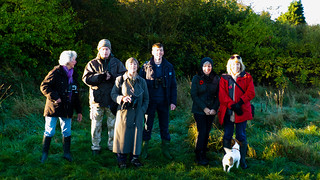
Seven intrepid nature lovers starting out on a wild walk on a beautiful November morning, with Chris and Geoff from the Smestow Valley Birders leading the way.
Tettenhall ridge, autumn, early morning sunlight
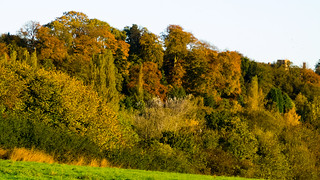
The early morning sunlight brought out the autumn colours of the trees by the Railway Walk and Tettenhall Ridge beyond.
Smestow Valley Wild Walk
A half-hour sky watch done, and time to get on the move.
Smestow Valley Wild Walk
At Compton Lock, with two little grebes downstream.
Song thrushes in a hawthorn
Further along the towpath, five song thrushes were at the top of a tree on the other bank.
Smestow Valley Wild Walk
As we reached Meccano Bridge, we were ready to step out of the shade.
Smestow Valley Wild Walk
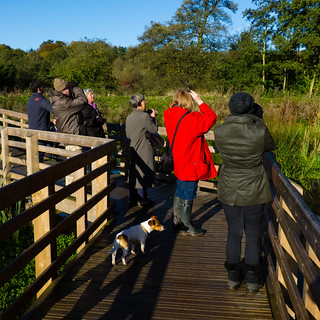
Two little grebes here got most people's attention, but the dog seemed more interested in what I was doing.
Little grebes fishing
The dabchicks were busy fishing ...
Little grebes fishing
and, as usual, staying just a little too far away to pose for a good picture.
Smestow Valley Wild Walk
The final stop before we all headed for our homes and a hot drink - Freshwater Pool
Reposted from Wolves Wild.

Tuesday, 12 November 2013

Proposed Residential Development at the Cedars

I have been informed this evening that local residents have received letters regarding a proposed development of 12 residential dwellings on the site of the former City of Wolverhampton College Horticulture Centre along the Compton Road adjacent to Compton Park.

A public exhibition is to be held on Tuesday 19th November 2013 between 2pm and 8pm at City of Wolverhampton College Paget Road Campus.

The letter advises that a planning application will be submitted during November and Wolverhampton City Council will undertake a formal consultation process seeking views regarding the proposals.

If you cannot attend the "exhibition" but would like further information, residents have been advised to contact rosed@wolvcoll.ac.uk.

There is obvious concern being already aired that this will affect the area of Smestow Valley LNR in the vicinity of the Barleyfield. To this end, anyone with strong views can contact me at smestowsightings@gmail.com. Please ensure that you also involve yourselves directly in the consultation process.

I apologise for the short notice regarding this matter. Quite a few of us did ask for assurances following rumours earlier in the year. It's just a shame that those rumours have proved to be true and now residents have been given very little notice to act. I hope as many people as possible can make it on Tuesday to look at the proposals and get involved in the consultation process.

Thank you

Saturday, 9 November 2013

Mud and snipe may have vanished,

but for swans the lake's spot on . . .


Dunstall Park


Saturday, November 9th, 10.00 to 11.30, dull, drizzle, clearing later.


Miserable morning, but fresh air better than staying in, so on with the rain gear and off to check the racecourse lake.  The water level's as high as it's been all year, the mud margins are minimal, so no sign of Snipe (there were at least 20 present at the beginning of October), but some stately visitors have already found the depth to their liking, a group of Mute Swan, feeding and preening quietly.  There are three adults and six grey-brown juveniles, difficult to say whether it's one family or two, but one adult distances itself somewhat, suggesting that the other two are a pair.  Two youngsters feed on their own for while, but then glide back to the group, so maybe all six are siblings (seven cygnets hatched at the lake in 2004.  The last successful nesting was in 2005).  Certainly it's the largest swan group seen here since six adults and six juveniles flew in on 2/11/2008.  Floating gently near the shoreline, a pair of Gadwall preen and sleep (they were first seen on  November 4th), at least eight Teal forage along the margins, while six male and one female Shoveler up-end near the beds of aquatic grass, bright red legs pushing backwards as half-submerged the birds feed from the lake bed.  Some of the males, most likely winter visitors from north western Europe, are now resplendent in black, white, chestnut and black-green breeding plumage.  At least six Coot busy themselves back and forward across the water, an adult and two juvenile Moorhen pick their way along the shoreline, and an adult Grey Heron calls harshly as it glides low over the lake, only to drift up over the trees and disappear down on to the Staffs & Worcs Canal.  Along the north western edge of the site all is quiet, just the glimpse of  a brown-backed Buzzard flapping noiselessly away from trees near the canal junction.  A flock of at least 200 Starling slants and slides low over the central grass area, feeding momentarily before being harried by a single Crow which forces them to fly as soon as they have settled, two adult and a second-winter Herring Gull look down from floodlight pylons, and at least 200 Black-headed Gull and 23 Lesser Black-backed Gull rest and preen on the grass.  Close to the hotel reception doors a male Pied Wagtail scurries under the parade ring railings.  What's the betting he'll be breeding here next year . . . 
                             
(Dunstall Park is a closed commercial site.  Access is strictly controlled)

PS
At Wightwick canal lock on Thursday 9th in calm, warm late-morning sunshine, wasps, flies, bees and a perfect Red Admiral butterfly feed on compact banks of sweet-smelling flowering ivy.  Nearby in the lock cottage hedge, red and pink roses are fully open.  It might as well be spring . . .       


Friday, 8 November 2013

Recent Sightings and Sunshine Forecast for Sunday's Walk!!

Highlights of recent visits to the Barleyfield:

17/10/13

Skywatch:

Lesser Black-backed Gull - 5 adults South
Woodpigeon - still no significant movements over the mid-section of the reserve - 18 South and 12 West on direct flight paths.
Skylark - 1 South over Barleyfield and one heard over Meccano Bridge area later
Meadow Pipit - 8 South
Redwing - 12 West and 18 moving locally

Other highlights:
Pied Wagtail - 25 on Meccano Bridge Playingfields.
Goldfinch - 10 around Lower Alders

19/10/13 - Overcast, light overnight rain, moderate Southerlies

Skywatch

Canada Goose - 24 SW
Woodpigeon - 33 South
Collared Dove - 1 low SW and 1 South
Pied Wagtail - 14 South/SW
Meadow Pipit - 5 South
Redwing - 73 South/SW
Fieldfare - 58 SW , largest groups of 25 and 21
Mistle Thrush - 7 South
Starling - 55 South/SW
Chaffinch - 1 SE
Linnet - 1 South and 1 SW
Siskin - 1st 2 of the Autumn NE
Greenfinch  - 4 North

Other highlights:
Tawny Owl - calling near the Crossings, just after dawn
Sparrowhawk - Male over Henwood Road area

29/10/13 - Light Westerlies after storms had hit South coast. Clearing

An excellent morning with 2 Brambling (Male and probable female) rising from the Western Border at dawn heading South and another Yellowhammer record with two females seen soon after flying out from the Crossings area to the centre of the field and then onto the Hawthorn in the Central Scrub area. They rested briefly before both leaving to the South calling. This is further evidence that the extended field margins and other un-cut areas appear to be bringing passing birds down, with the valley offering safe roosting opportunities during Autumn movements.

Skywatch:

2 propable Greylag Geese - Heading South down the valley. Only doubt came from the fact that they didn't appear to be showing any distinctive wing-pattern. Weren't vocal, which didn't help.
Fieldfare - 45 SW - largest group of 20
Redwing - 27 South with 30+ local birds along the railway line.
Starling - 9 South
Chaffinch - 5 South

30+ Goldfinch on Compton Park just SW of the tennis courts was the largest flock of the Autumn so far.

"Wild Walk" this Sunday 10th November 2013

Just a reminder that our informal skywatch and tour of the mid-section of the reserve between Compton and Newbridge is still on this Sunday.(See previous post).

We will be meeting at the top of the Barleyfield, by "Geoff's Bench" at 08:00.

The weather forecast is now looking better so it looks like we can cancel the Mac's and Umbrellas!! (Hope I didn't think that too loud!!).

Look forward to seeing everyone there.

Thank you


Tuesday, 29 October 2013

News News News ...From the Wildside!!

Wildside Activity Centre

First a little showcase for this important charity that promotes awareness and participation in nature activities, volunteering and conservation.

There is a full programme of fantastic events over the coming half-term week.

Full details can be found at:

http://www.wildsideac.co.uk/images/OctHalfTerm2013.jpg

So no excuse!!! Grab the kids and get down there!!

Wild-Walk

I am inviting anyone interested, to join me and as many of our valley wildlife recorders as possible on an informal walk, covering the mid-section of the valley, between Compton Bridge and Newbridge on Sunday 10th November 2013.

Dogs are welcome, as are children, if accompanied by an adult.We will start at 08:00, with a short skywatch at the top of the Barleyfield, looking for birds on the move along our valley, followed by a trip around the Barleyfield, Compton Park, along the canal and back through the paddocks, following the railway walk.

For all those interested in attending or leading groups, please send me a brief e-mail to smestowsightings@gmail.com so that I can get an idea of numbers.

New Authors

Valley users are probably aware of the presence of our local wildlife photography expert, David Ashcroft, otherwise known as the creator of "Wolves Wild" (http://wolveswild.net/). I have linked his site to this blog from the outset, and I have recently asked David to start keeping formal records of what he sees, so that it can contribute towards our understanding of wildlife, and why it is vanishing at such an alarming rate.

Talking of contributions to wildlife, I bumped into Maureen this morning, who has an excellent feeding station set up in her garden near Compton Lock. She provides an important food supply for the birds in this area, and is also going to start producing records for future valley reports

With these two "Wildlife-Warriors" contributing so much to the reserve, It is therefore fitting that I invite them both as authors to this blog and I am sure you will all join me, in warmly welcoming them to our little, caring community!!

Angus Dickie acknowledges the work of so many others, who have contributed to previous valley reports, every time I see him. Therefore, I also warmly invite anyone else who regularly watches and records wildlife in the valley to get involved by emailing me your details.

As part of the transition from paperback to online reports, I will be offering a pick-up/drop off service, so that we continue to include valuable manual records, provided by passionate enthusiasts, who are, perhaps less able or willing to start surfing the net!! Thank you so much for your continued support.

Moving Mountains Nature Network - Charity Wildlife Walk - Spring 2014

I am planning an event, which will raise awareness and trigger a strengthening of the protective nature networks, around Smestow Valley, Clayhanger Marsh (Diverse habitat and SSSI), and an important urban wildlife corridor near Harborne. Local schools will be involved, so that we can lead our children towards the beauty of Mother Nature that lies within our green spaces. Who knows, it might generate our next Sir David Attenborough or Chris Packham!!!

Any local individuals, groups, charitable organisations or businesses that would like to get involved, please register your interest at smestowsightings@gmail.com

Thank you


Wednesday, 23 October 2013

wed 23 oct 2013             mid afternoon

sunny but chilly westerly breeze

Very wet underfoot ( or should I say wheels ). I cycled from Compton Lock to Aldersley Junction and had my first little grebe of the autumn at Tunstall Water Br and a grey wagtail at Tettenhall Old Br.
                                         After a quiet spring, summer and autumn, cheer up it will soon be christmas! lol.


Thursday, 17 October 2013

Tettenhall and District Draft Neighbourhood Plan - Have your say!!

I am in the process of ploughing through this important plan, and for so far it looks simply excellent!!!

Anyway, here is the official briefing on the plan................

The Draft Tettenhall Neighbourhood Plan for the 2 wards of Regis and Wightwick is out for public consultation until 31st October 2013. The Plan is a national frontrunner. Its purpose is to give local people greater ownership of how their neighbourhoods are developed over the next 10 years. Once ‘made’, next year, any planning application made for a development or change of use of land or buildings in our area, will have to be assessed against the Neighbourhood Plan, alongside national and city-wide policies for planning.  It is therefore of huge importance.

The Draft Plan is based on hundreds of ideas and suggestions gathered over the last 2 years from local people and has been drafted by local residents.

Our vision states:

‘ As residents we take pride in our attractive, characterful and vibrant area, and especially in all the green spaces ranging from Smestow Valley Local Nature Reserve to small domestic gardens. Our Plan will help conserve both the places of historic interest and those most appreciated in the Character Studies which were carried out by local people. Designs for all new development will be required to show sensitivity to local forms, scale and materials and to meet high building standards and so ensure sustainability. The Plan will enable local businesses to invest in new opportunities. Action is required to alleviate traffic problems, whilst housing, community buildings and other amenities will need to be upgraded over time. By putting these priorities into our Plan, we can enable people to make it as good a place for the next generation as it is for us.’

For lots more information and to view the Draft Neighbourhood Plan and to complete a feedback form online at http://www.ourplaceourplan.org.uk/


Friday, 11 October 2013

Missed the Massive Redwing Movement and Twitter Feed to Connect us to Nature

Friday 11/10/13 - Moderate NE, overnight light rain, clearing : Barleyfield "vismig"

A frantic day on the work and home front yesterday meant that I was left to read about the tens of thousands of Redwing that had reached Britain on favourable winds.

An incredible 33,082 were recorded over "The Pinnacle", Sandy, Bedfordshire, in just four and a half hours yesterday morning!! A more modest 2,600 had passed over Black Bank in Staffordshire.

I hit the patch this morning, knowing that winds were more northerly and were likely to halt movements, but still wanted to get some idea as to whether the valley had witnessed some of this event.

It was immediately clear, on arriving at the Barleyfield that birds had got this far West. There was a "movement" of birds west, but aside from 3 groups, the largest holding 35 birds, the rest were grounded birds that were lifting from overnight resting places.

A one hour vismig produced the following, before fading:

Canada Goose  37 SW
Mallard - 5 SW
Cormorant - 4 High SE and 1 soon after heading South - all adults
Black-headed Gull - 65 SW
Woodpigeon - 19 SW - apparently still too early for migrants on the favourable NE
Pied Wagtail - 4 SW
Meadow Pipit - 4 grounded birds, lifted off the Barleyfield and headed SW
Redwing - 150 - c50 on migration West and the other c100 were grounded birds, lifting and heading low West. 55 of these were around the Lower Alders.
Song Thrush - 1 South
Blackbird - 6 coping remarkably well heading West on the cross wind.
Starling - 10 local birds SW and 7 presumed migrants heading West.

MOVING MOUNTAINS NATURE NETWORK (MMNN) -TWITTER FEED

As part of the push towards connecting more people with wildlife, I have now set up a Twitter feed on this blog, that will provide you with updates regarding wildlife events, issues and sightings. They are all my comments or retweets, and will not include personal or provocative opinion from others. Media releases will be shown, where I feel that they are relevant to the understanding and protection of wildlife.

MMNN members who follow us on Twitter will benefit from having their events and causes highlighted on this blog.

I hope that this adds to your experience, whilst visiting us!!

Thank you.


Tuesday, 8 October 2013

Barleyfield Provides Yellowhammer with Bed and Breakfast!!

Sunday 6th October: Clear, dry, cool start, Light SW -  Barleyfield area

As posted previously light South-westerlies, really do suit visible migration in the valley, today producing the best Pipit passage of the Autumn so far for me (there are still no noticeable Woodpigeon movements over the mid-section of the valley):

Canada Goose - 117 SW early
Black-headed Gull -217 SW from roost to Staffs feeding areas
Lesser Black-backed Gull - 10 SW
Stock Dove - 2 NW
Collared Dove - 3 South, can't remember when I last seen this many in one morning from Barleyfield!!
Meadow Pipit - 191 South - these really are good conditions for this species and it was great to see good numbers dropping onto the newly extended middle scrub!!
Pied Wagtail - 17 South
Grey Wagtail - one West early on and one SW from Graisley Culvert later.
Song Thrush - 2 West and 1 South (1 uttering brief phrases of song to the SW)
Starling - 1 SW was poor but c25 left from the academy floodlights SW later
Chaffinch - 5 South
Goldfinch - 4 South and 7 around the North end of the Barleyfield

A remarkable 38 species were noted, without leaving the Barleyfield area, with the highlight being a female Yellowhammer that had been roosting in the Hawthorn at the tip of the middle scrub. It preened, called a few times, dropped to the ground then flew off South at 07:00.

Other notable sightings included.....Geoff Russon!!! YES, it sounds like he is migrating South again now as well, so get used to seeing "Mr Camouflage" on a regular basis again (we hope).

Sparrowhawk - one SW along valley early and one East into the middle scrub later
Great Spotted Woodpecker - female at top of Barleyfield
Dunnock - getting more vocal with 3 around the south end
Blackcap -male and probable adult female at Hanging Gardens
Chiffchaff - birds singing at top of Barleyfield, where two were later seen and also at Eddy's Alders
Goldcrest - one at top of Barleyfield
Nuthatch - one calling from Eastern border
Jay - 2+ in SW corner
Bullfinch - 4+ around


Saturday, 5 October 2013

After the Peregrine strikes, the

name of the game is patience . . .


Dunstall Park


Sunday, September 29th 2013, mid-morning, cool, high broken cloud, easterly breeze.

Two weeks away in sunnier climes, so now it's time to see what might still be around and what might have arrived.  The ground staff say the last swallows and martins departed early last week, and the only migrant seen on this quiet morning is a single Blackcap feeding on elderberries in the north western corner of the site.  An adult Pied Wagtail forages along a drainage ditch by the grandstand, a male Sparrowhawk flaps and glides low towards the Farndale estate, a Jay flies from the oak copse, and on the central grass area 50-plus Lesser Black-backed Gull sit or stand with 160-plus Black-headed Gull and an adult Herring Gull.  At the lake a single Lapwing stands somewhat forlornly by the island, four Snipe and 16 Teal are lined along the water's edge out of the wind, four Coot and four adult and two juvenile Moorhen swim or pick their way through and around the banks of spiked aquatic grass, an adult Grey Heron stands hunched near the perimeter fence, and a Grey Wagtail calls as it flies away towards the Staffs & Worcs Canal.
Tuesday, October 1st, morning, cool, dull, south easterly wind.
Duck numbers are increasing now, with birds coming out of eclipse and dabbling species returning to the racecourse lake as winter visitors, taking advantage of relatively low water levels.  Five Mallard, possibly a female and her offspring present for some months, are feeding, at least 17 Teal rest and preen, and near the Smestow brook overflow apron five male Shoveler are grouped together, their chesnut flanks and dark green heads now becoming more obvious as their breeding plumage emerges.  Ten Snipe are visible (there will almost certainly be more present), and a last check reveals a single Green Sandpiper feeding along the margins (there have been regular records since mid-June of this migrant wader calling in at the lake).
           
Wednesday, October 2nd, mid-morning, dull, warm, south easterly breeze, clearing later.
Meet up with a Codsall birdwatching group on the car park as arranged at 10 o'clock, and notice as we sign in at the hotel reception that Gareth's name is already in the book.  That means he can tell us what's about, and, knowing him, he may well have found something good.  So, through past the grandstand, and yes, already there's the "cronk cronk" of a Raven, the bird moving north westwards towards Stockwell End and Tettenhall.  A good start, but hang on, Gareth's approaching to tell us that a "huge" female Peregrine has in the last ten minutes come in low over the lake and has sent ducks, waders, the lot, flying to the four corners of the earth. Gareth's on his way to work, he can't stay, but he wishes us luck.  OK, we'll just have to be patient, not everything will have gone.  An initial check shows Coot and Moorhen going about their fussy business as two Stock Dove fly up from the lake edges, two Jay fly towards the Farndale and at least 60 Starling go to and from the top of nearby floodlight pylons.  In the distance come the autumnal calls of two large skeins of Canada Geese, at least 150 birds honking their noisy way low over Newbridge towards the city.  Then, one by one, the Teal quietly emerge from the aquatic grass, seven of them eventually resting or feeding near the island.  Two Snipe are spotted, sleeping one-legged and head tucked in, their brown striped plumage perfectly camouflaged against the dying yellow of the sallows.  Someone's sharp eyes pick what could be another flying away from the lake, definitely a wader, but the bills's too short, a white rump shows as it turns to circle before leaving north eastwards, it's a Green Sandpiper, possibly the bird seen at the lake the previous day.  Time's getting on, so we move along the racecourse's north western edge, where a juvenile Buzzard floats low over the canalside trees, a Nuthatch calls, and at least two passage Chiffchaff flit in and out of the elderberry and bramble bank near Aldersley canal junction.  Finally, back to the hotel and off to lunch. Just like the weather, things turned out fine in the end . . .
Saturday, October 5th, morning, dull, calm, warm, heavy overnight rain.           
A quick visit, but enough time to see that Snipe numbers are building nicely, with at least 20 at the lake.  Thirteen Teal are present, and there's the unusual record for the lake of a Long-tailed Tit flock moving through the waterside bushes.  Nearly all the Coot have now dispersed, with only three seen at a site which has enjoyed its best-ever breeding year for the species.
   
(NB.  Dunstall Park is a closed commercial site.  Access is strictly controlled).


Saturday, 28 September 2013

Patchy Vismigs, 2nd Wader Species attracted to Compton Park Wetlands and Work in the Valley

Unlike last year, when I had more time in September, this years vismigs (visible migration watches), from the Barleyfield, were rather hit and miss. This led to my missing the main hirundine (Swallow and Martin) passage, which occurred in the region on 15/9 19/9 on favourable South-westerlies.

22/9/13 Dead calm and mild, overcast Light SW 6:45 - 8;45am

Canada Goose - 65 SW
Mallard - 7 South
Lesser Black-backed Gull - 4 South
Black-headed Gull - 97 SW
Woodpigeon - only 6 SW
Swallow - 42 South
Tree Pipit - 2 separate individuals South calling
Meadow Pipit - 64+ South
Grey Wagtail - 2 South
Pied Wagtail - 8 South
Starling - 3 SW
Greenfinch - 3 South with 6 local at top of Barleyfield
Goldfinch - 1 East and 20+ local around Compton Park

Other sightings: Adult and Juv Buzzard calling from Tettenhall ridge, 1 Stock Dove on Barleyfield
4 Mistle Thrush on playingfield by Meccano Bridge, Dunnocks becoming more active with 3 calling at the South end of the Barleyfield, Chiffchaffs singing from top of Barleyfield and Western border, 2+ Coal Tit calling from the Western Border Annex.

22/9/13 7:00 till 7:30 Top of Barleyfield

A rare dusk visit paid dividends. 2 Common Sandpipers, headed low over the Barleyfield in a direct line Southwards from over the Lower Alders!! Whether they had actually visited the wetlands or not was unknown, but they were certainly attracted down to it as darkness was approaching.

This is the second wader species at this new site now, after a Little Ringed Plover was found there, again before dusk in the Spring.

23/9/13 1:00 am Junction of Compton Road and Richmond Road

Tawny Owl hooting there.

23/9/13 Vismig top of Barleyfield Misty overcast, drizzle, Light South

Autumnal weather produced the first vocal Song Thrush at Compton Hill Drive.

Canada Goose - 31 SW
Mallard - 4 South
Skylark - 3 very early birds, headed South together, briefly dropping onto the Barleyfield, producing a moment, which represented a flash-back in time to when large flocks were seen on the deck at this site. Excitement was therefore mixed with sadness.
Swallow - 91 South with the largest group holding 45 birds
Meadow Pipit - 24 South
Pied Wagtail - 19 South
Jackdaw - 11 South
Starling - 11 South 1 NE and 40+ feeding on the playing field by Meccano Bridge in the damp conditions.

Other sightings:Great Spotted Woodpecker at top of Barleyfield, 2 Chiffchaff singing from western border and middle scrub. There was also a fall at Eddy's Alders, with c10 Chiffchaff, 2+ Willow Warbler and 3+ Blackcap present there. Commitments prevented a tour of the patch to see other landings, which wasn't half frustrating!!! 5+ Song Thrush were also feeding in Elders there.

25/9/13  vismig abandoned as conditions worsened from dawn,  but a high count of 112 Canada Geese was notable.

26/9/13 vismig again abandoned, as forecast easterlies, turned out to be brisk NE, which just kills passage at this time of year, though the sturdier Woodpigeons will love such conditions, when they start to move in numbers next month. Another Song Thrush, was uttering short bursts of song near Meccano Bridge.

With 40+ Magpies heading between West and North-east at dawn, the total roost, must now be well over 60 birds. A Sparrowhawk was over Tettenhall College and 2 Grey Wagtail headed West off the wetland.

27/9/13 vismig 07:00 - 08:00 Light SE, dry, 70% cloud cover

What seemed to be highly favorable conditions, failed to fully materialise, although anything would have beaten the previous two watches!!

Canada Goose - 35 SW 2 NE
Mallard - 12 South
Swallow - 25 South in 3 groups
Meadow Pipit - 3 South
Pied Wagtail - 25 South
Jackdaw - 5 South ex roost
Starling - 34 SW from off the floodlights at the Academy

Conservation Works

The woodland edge and meadow has now been crafted by Compton Lock, and similar works will take place at the Paddocks, near the ranger station at Newbridge. This will result in an increase in biodiversity (the range of wildlife) and will benefit walkers, as the new method of management will reduce vegetation encroaching onto the footpaths.

The next Smestow Valley Advisory Group Meeting will be held on Tuesday 8/10/13. I have already raised the issue of Contractors sticking to their agreements, with regard to the emptying of dog bins and the carrying out of work to order, in areas of importance to wildlife. The ranger services have been superb, as always in sorting these issues.

Also the Autumn and Winter work program is on the agenda, in an effort to increase the information available to us ahead of any works commencing in the valley.

At a time, when staff and resources are already scarce, new government plans to protect the economic and social value of nature, which involve new ranger and leisure services work at recently designated Local Green Spaces and Local Wildlife Sites, are adding to workloads.

 I feel that it is right, therefore to say that the council are doing a superb job, given the present circumstances and wish to thank them for taking on every issue which I have raised on behalf of local residents and dealing with them effectively.

Please email me at smestowsightings@gmail.com if you have any issues that you would like me to raise at this meeting.

Moving Mountains Nature Network

A new article "Local" is the Word to Halt the Decline of Wildlife in the UK - BUT only with National Coordination , has been posted on the network site. This focuses on the importance of local wildlife clubs, local recorders and local recording offices (LRC's), and the creation of local partnerships that engage local communities and support the tireless work of local council biodiversity officers, wardens and volunteer patch watchers and bloggers across the country.

The item also highlights the need for coordination in terms of the creation of distribution and status data, and also national campaigns, which encourage children to become naturalists, and which provide information points in all green spaces, sign-posting the public towards, their local wildlife clubs, societies and volunteer groups.

The network now has 165 sites registered, so if you support this initiative please add a link to your blogs and spread the word. Member issues have already been taken on and we are, after less than two months, a third of the way towards a target membership, where we can gain national recognition and march on towards the ambitious goal of halting the decline in the UK's wildlife.

Thank you.


Saturday, 21 September 2013

MMNN - Contributing to Science OR Encouraging Participation ?

I have had it put to me this week that MMNN has to decide which side of the fence it is on.

My vision for MMNN is quite clear: It is so easy to tick both boxes and make a scientific contribution AND engage the public.

I can illustrate this fairly simply:

1. Members such as Council's and wardened reserves, that have the knowledge and experience of data collection, will continue to use a platform such as Living Record, or send data into local recorders and LRC's. They already do an excellent job contributing to Science. My aim here is simply to get as many members as possible onto a common platform, because it will help everyone along the chain in terms of quality and resources. Coordination, repeated surveying and "think-tanks" will help member council's in their tireless pursuit of biodiversity targets and allow them to monitor their performance more easily.

2. Next. The interesting one. What I call "The Second Element": the army of wildlife enthusiasts that hold intimate knowledge of their patches. 

To increase the quality and volume of the information hitting the LRC's and NBN, we need expansion of Local Wildlife Partnerships (LWP). This allows a patch of the British countryside to act as a structured "reserve". My life has taught me NEVER to have barriers or say something cannot be done. A central role of MMNN will be to assist in the creation of local partnerships and to identify new sites that require protection and designation, through our army of "bloggers" and "patch" watchers. 

It may well be the LWP's that provide the answers, as to why wildlife has vanished in such a short period of time, simply because they venture away from the managed reserves and into our more typical countryside and "wild Britain". The "patch" watchers may prove to be biodiversity's knights in shining armour!!!

3. Now for the worm and what I call the "Third Element". I had a biodiversity officer comment last week that 95% of the population have no intention at all in engaging with wildlife. 

Furthermore, my friend's son was asked at school a few weeks ago about his hobbies in front of the class. When he replied that he was a birdwatcher, his supply teacher laughed. Needless to say, after my involvement, her agency have been informed that she is no longer welcome at that school!!

To meet our 2020 biodiversity targets, this attitude has to change. MMNN  can embrace participation and education, WITHOUT compromising Science and Conservation. I'm not being funny, but if you ask a School to identify Worms, you will get misleading information!!! It probably would bore most of the kids to death too!!! 

If "Citizen Science" goes wrong, you cannot blame those making the records  for down-grading the quality of data. Surveys have to be designed carefully from the outset , in order to maximise accuracy of results and the positive influence that it has on the participants.

Is it right that we have more than 80,000 species of wildlife in the U.K? The vast majority of BAP species, don't even appear in the best selling field guides. These have to be recorded only by those with the necessary ability. But I will not accept that MMNN has to be on one side or the other, when the answer is so simple.

Schools can be provided with surveys, which cover easy to identify species. Don't ask them to survey Small White Butterflies, because some kids or even teachers may confuse them with worms, if you see what I mean?

But if every school in Britain performed a survey of male Orange Tip Butterflies, would you disregard the data as useless because it was produced by the 95% of the population that we need on board to save our wildlife? How many future naturalists would this approach produce? How many kids might be influenced by the hunting Kestrel that they see, whilst out on a warm Spring day with their school mates, counting butterflies on their local green space?

We are so lucky to have so many safe LNR's, Wildlife Trusts sites and other reserves and parks in close proximity to schools. We are also blessed to have our State of Nature partner organisations, and I am sure that they can produce a short-list of say 200 species, which are unmistakable and that can be surveyed annually by schools. If I were a science teacher and I had these species on Power Point, the first thing I would be doing with them, on the first week of the academic year, is showing them to my class and allowing them to pick their favourites to study during the year, so that they would already be attached to the project. (I think this area is actually part of the U.K's commitment to biodiversity?). There are a good number of easily identifiable "indicator" species, that if widely surveyed repeatedly, would tell scientists a lot about the strength of ecosystems, locally and nationally, and high-light where they are breaking down fast so that local factors can be identified.

If we make barriers, we shall have barriers!!! Kingfishers are still seen on the section of the River Cole in Birmingham where I first fell in love with nature. I will not allow them to vanish because we failed to rise individually and collectively to the challenges facing the U.K's unique range of wildlife and habitats, by placing obstacles in the way that aren't even there.

Join MMNN today. Together WE REALLY CAN make a difference.

Wednesday, 18 September 2013

Barleyfield Trimmings and Quite Vis-mig

Wednesday 18/9/13 Cool, drizzle with brief interlude between 07:00 and 07:45 allowing short vis-mig from top of Barleyfield. Light NW.

NW winds rarely produced good vis-migs last September, because of the valleys linear position running NE to SW and today proved that once again:

2 Cormorant South 
4 Meadow Pipit circled field and then SW
7 Starling SW
8 Greenfinch SW

Also 2 Great Spotted Woodpeckers and 1 Green Woodpecker

Just a note to all users of the Barleyfield: The contractor will be returning soon to pick up the grass cuttings. Thank you to Wolverhampton CC Ranger and Leisure Services for providing such a rapid response today, regarding this issue.

This method of leaving the cuttings for a short while allows the seeds of the meadow flowers to disperse more effectively.

As regards the new areas of set aside, you can feel already, just how much of a difference this new regime will make to the insect and mammal populations, whilst also helping late flowering plant species. Cinnabar Moths, may well complete there life cycle here now which will add to evening walks.We may well get a Wintering Kestrel back, and the umbellifer stands may attract migrant or Wintering Stonechat.

Thank you to all those that were involved in the planning and authorisation of this initiative, which will enhance the biodiversity at this site, by adding micro-habitats and buffer zones for wildlife.